Rescued Dogs: Dog Training

Rescue centers and owners who are prepared to give rescued dogs a second chance do a wonderful job. However, rescued dogs can provide a challenge to any prospective trainer.

Planning and Preparation

In the unlikely event that the rescue center has any knowledge of the dog’s history, this should be obtained if available. The center may also be able to provide clues to the new owner about behavioral traits they have noticed.

It is very important to note any health considerations and to examine the dog thoroughly for any signs of poor health, malnutrition being common in these cases.

Depending on the findings at this stage, balancing and if necessary supplementing the diet with vitamins or simply regular feeding will be required for the “new” dog.

First Steps for Training Rescued Dogs

Preliminary parts of the process will be based on building trust between dog and owner. Physical contact might need to be approached slowly. For example, it may be necessary to only reward the dog with a treat by putting it on the floor and letting the dog approach it when the owner has retreated.

These first steps must also retain the long-term goal of training and socializing the dog normally later, so the owner must establish the role of leader or alpha, in the dog’s new pack. Although this might not be possible quickly, it must be an aim from day one in order to prevent problems at later stages.

Some of the simple forms of alpha techniques most relevant to introducing rescued dogs might include feeding the dog its meal following a break after the owner has eaten, discouraging the dog leading when out walking or preventing it approaching visitors first. There are many others that are more significant to dogs than many humans imagine.

Establishing the trainer in the alpha role may be difficult with some rescued dogs, in which case patience, time and experience will be needed.

Heading Towards Normal Dog Training

When physical contact has been attained, either immediately in some circumstances but often after the above stages, a further test to assess the temperament of the dog should be carried out.

The dog should be encouraged to sit down, then to lie down. The dog should then be rolled over and a hand placed on its chest. The reaction from the dog may signify too much resistance, which usually indicates aggressive traits. Most dogs will react a little and allowances should be made; experience with previous pet dogs is a good guide. At the other end of the scale, the dog may be completely submissive or even fearful.

Having reached this stage, the owner is able to start normal training but from an informed standpoint. Training techniques should then be adapted based on these early findings.

Shepherd Breeds: The Origin and History of the Herding and Guarding Dogs

Around the time of the California Gold Rush and the American Civil War, the need for clothing made of wool to keep warm on the homefront led to the introduction of a breed of dogs called the Shepherd. This dog was to become not only a guardian for man but also a guardian for a very much prized possession, the sheep.

The Australian Shepherd

The origin of the Australian Shepherd originated either in Australia and could have also developed in Spain. The Spanish sheepdog was used in New Mexico and were often larger with a yellowish-white color. The breed served mankind by guarding livestock and was characterized as having plenty of energy; after all, it had to run after the sheep and other animals

Among the early breeds of shepherd dogs was the blue merle, a marbled gray and black dog. There were also black and white dogs with no spots or blending of colors. These dogs were called either the English or Australian Shepherd.

According to Linda Rorem in her article A View of Australian Shepherd History,1987, there existed another breed of Shepherd from Spain and France, or the Basque region, which was employed to guard sheep and assist in the fields.

An interesting fact is that the tails of these dogs took on different appearances. It was the English Spepherd that had the natural bob tail, but the Australian Shepherds had longer tails.

The herding Basque dog which came from Spain and France could have both a shaggy face or a smooth face.

The Welsh Heeler

A breed of dog developed in Germany and was called the Koolie. This dog soon was introduced by German settlers into Australia. It was within this continent, that it interbred with the shepherds of Britain to form the Welsh Heeler. The dogs from England were called English Shepherds; whereas, the dogs from Australia were called Australian Shepherds.

A Miniature Shepherd

There is also a very cute variety of Shepherd called the miniature Australian Shepherd which is suited as a house dog. It is quite lovable and agile. There are so many varieties and colors of Australian, but they are all beautiful, intelligent. and sociable creatures.

The German Shepherd

Like the Australian shepherd the German shepherd had its origin as a guardian dog or working dog, but it also exhibited other fine attributes such as strength and keen intelligence.

In 1899 Captain Max Von Stephanitz introduced a dog which was to be the first German Shepherd. The dog was named Horan and was a composite of different varieties of shepherds including the long hair and short hair varieties. Von Stephanitz wanted to develop the breed for its intelligence and strength.

According to the GermanShepherds.com website, breeders began calling the German Shepherd the Alsatian Wolf Dog due to the war with Germany and the reputation of the wolf. This changed in 1977 when the dog was once again called the German Shepherd.

The German Shepherd variety originated with wolf breeds, but it is a strong breed of dog devoted to its human and wary of strangers.

Both breeds are used today in many ways including guide dogs, ranch dogs, police work, and family dogs.

The Golden Retriever: These Happy Dogs Are a Great Addition to Any Family

mypuppystory.com

These Happy Dogs Are a Great Addition to Any Family

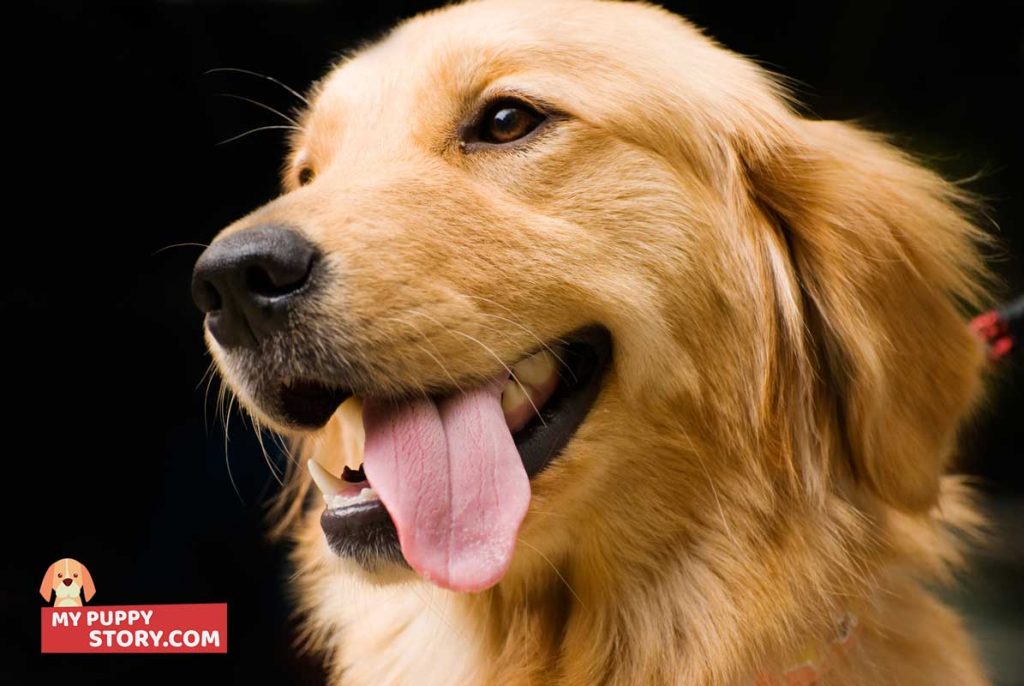
The golden retriever is a gorgeous, stocky built dog with a great personality. One of the most common family pets in the United States, they are known for their beautiful water resisting coat, which can range from a very light beige to dark gold. Originating from Scotland, this sporting breed was used there for hunting purposes. These days though, they are more often a family companion, and are one of the most popular dog breeds.

Playful Family Pets

Goldens are energetic dogs, in need of daily vigorous exercise to keep them happy. They are gentle by nature and are perhaps the best dog for small children, with their endless patience and tolerance. They can get a little rambunctious while playing though, and like to roughhouse with older kids. Always ready to play, they are perfect for athletic, active families. Goldens especially love to play ball, and are always ready for a game of catch. With their heavy coats, they also love to play in the snow, and are very fond of swimming as well. Easy to train and housebreak, golden retrievers are anxious to please and cooperative, and will learn tricks and commands quickly. If looking for a guard dog, though, look elsewhere. These dogs love everyone and are not reliable for protection. In fact, they are more interested in making friends with everyone than protecting their owners. Fairly quiet, they will usually only bark if a strange animal or person enters their territory.

A Few Negatives

Every dog has it’s faults, and golden retrievers are no exception. On the downside, they love to chew and carry things around. This is a habit that needs to be broken while they are puppies, as even adults love to chew up just about anything if allowed the opportunity. The only other negative aspect of owning a golden retriever is that they are nearly continuous shedders. They will often shed even in the coldest winter. Frequent brushing is the best way to keep the shedding to a minimum, and they usually enjoy it tremendously. These people lovers also do not like to be alone, and can get into mischief when left inside by themselves. Households where someone is home frequently during the day are best for them, as they will thrive on attention.

Health Issues

As these dogs age, there are a few health problems that golden retriever owners should be aware of. Cataracts can develop, as well as hip and elbow dysplasia. Cancer is on the rise in recent years, with lymphosarcoma being one of the most common types being seen. It is important to feed golden retrievers a healthy diet and give them frequent exercise, as they tend to become overweight in old age. An active, healthy lifestyle will also help to prevent medical problems as they grow older.

Best Dog Breeds for the Elderly: Choosing a Good Pet for Seniors

Dogs make great companion pets for many people but they are especially beneficial for the elderly who often live alone and spend a great deal of time at home. Studies have shown that having a dog can improve the overall well being of an older person. Dogs can benefit senior citizens in many ways.

Companionship

A good companion dog is happy to share time watching tv, gardening, or just napping. For seniors who live alone, the unconditional love of a dog provides a boost in self esteem. Feeding and caring for an animal can help them feel useful and give them a reason to get up in the morning. Studies even show that having a dog can lower blood pressure and hasten healing time. A dog can bring much joy and comfort into the life of an elderly person.

A Measure of Security

A canine’s sense of smell, hearing, and eyesight is much more efficient than that of a human. An alert dog can smell, hear, and see things much quicker than a human would. Prowlers are discouraged by a barking dog because of the attention it draws to them. They also understand that a protective dog may attack if they feel that their owner or property is in danger. Law enforcement often recommends a dog as the best burglar deterrent.

Encourages More Exercise

Exercise is important for the elderly to keep them healthy and strong. Walking is a popular exercise of seniors that may be neglected without the encouragement of a dog. Dogs love to go walking and will sometimes go get their leashes and beg for a walk. A senior citizen is also more likely to go out strolling the neighborhood if he has the security of a dog on a leash.

Social Opportunities

Dogs can make wonderful conversation starters for the elderly. Meeting new neighbors over the back fence can be easier when the topic of dogs comes up. Almost everyone loves dogs and can relate a story of his own dog or one he has had.

Choosing a Dog for the Elderly

Taking care of a dog is a commitment and should be considered carefully. There are several main concerns for seniors.

  • Size – the dog should be small enough to handle easily and small enough to be a lap dog if desired
  • Temperament – the dog should be easily trained and reliable with an appropriate level of activity
  • Grooming – breeds that require frequent baths, brushings and expensive clippings may not be appropriate for the elderly

Best Breeds for the Elderly

Although different personalities are present within a breed, the following breeds are some good considerations for older people.

  • Pug
  • Chihuahua
  • Boston Terrier
  • Cardigan Corgi
  • Welsh Corgi
  • French Bulldog
  • Beagle
  • Dachshund
  • Miniature Pinscher
  • Schnauzer
  • Cocker Spaniel
  • American Eskimo

Mixed Breeds

Many mixed breed dogs make fine pets for senior citizens. Good choices are available at shelters and breed rescues. Most shelters and rescue workers are happy to discuss the dog’s temperament, care and grooming requirements.

Dog Training: Tips on Working with Your Dog

Without the proper training and instruction, puppies can grow into ill-behaved dogs. Behaviors need to be modified, eliminated and instilled in order to create a companion who is a pleasure to live with (versus a curse) as most dogs live a decade or longer.

  • Dogs seek a strong pack leader. That needs to be you. You are the leader, not the dog!
  • Make it clear that certain behaviors, such as chewing on everything in its path or using your carpet as its bathroom or incessantly barking, are not acceptable and will not be tolerated. Discourage these with a strong, firm voice, hand clapping or by withholding attention or affection. Even better if you can discourage the negative behaviors at the first sign of the dog engaging in the behavior. For example, walking over to the shoes in order to chew, sniffing for a place to urinate, etc.
  • Reward positive behaviors, such as going to the bathroom outside, sitting and staying, letting go of specific items, with treats and with verbal praise. At first use snacks as dogs respond favorably with treats. But this cannot be your only method of reward. First, the dog will come to expect the treat and second, there may come a time when you do not have a snack handy.
  • Reinforce training on a regular basis. Every moment with a pet can be a teaching moment. Pat and praise good behaviors, even ones you did not command the dog to do.
  • Be consistent. Every time a negative action or behavior occurs, repeat the training.
  • Use verbal and action cues. Certain words and hand gestures can be linked. If your dog cannot hear you but can still see you he or she will have a second reference cue.
  • Again, you are the boss!
  • Over time, teach others how to interact with your dog. This is helpful for family members, friends, house guests and other visitors who are around your pet.
  • Decide which commands and behaviors are most important to you. Tricks may be nice but are of no use if your dog will not sit, stay, refrain from jumping or eating everything in sight.
  • Useful commands and behaviors include: come, down, heel, leave it, loose-leash walking, off, settle, sit, stand, stay and wait.
  • If you are unsure where to begin, ask your veterinarian, an associate at your local pet store, friends and family members who have well-behaved dogs or contact your local shelter or human society or check out books from the library.

CSR: Crime Scene Rottweiler

In the past few months, we’ve looked at the Rottweiler’s historical jobs of cattle drover and cart dog. Now let’s take a brief look at another role for which they are historically known: police dog.

At the turn of the 20th century, the Rottweiler had fallen on hard times. Laws had made it illegal to drive cattle along public roads, bringing an end to the days of the drover dog. Likewise, dog carts had fallen out of favor as the donkey became more popular. Finding itself unemployed, the Rottweiler was in serious danger of becoming extinct.

In fact, according to legend, in 1905, only one Rottweiler bitch could even be found in the town of Rottweil. It’s a misconception to think that she was the only Rottie in existence at the time. But she was the only one in the breed’s historic hometown, which is like saying that there was only one Red Sox fan left in Boston. Truly a sorry state of affairs.

Luckily, small pockets of the breed existed in other areas. In it’s heyday, the butcher dogs of Germany had such an excellent reputation as working dogs that they were sought after by people outside of the Rottweil area. Also, the 19th and 20th century saw the birth of dog shows, and a new type of dog fancier who worked to preserve dog breeds not because of a breed’s usefulness, but because of a love for that breed.

However, what ultimately saved the breed was a trait that dates back to its ancestors who crossed the Alps with the Romans, its protective instinct. Those Roman dogs were charged not only with herding the army’s cattle, but also protecting those cattle from predators and raiders. That trait was passed down through the centuries, where the dogs were charged not only with driving cattle, but also protecting the money once the cattle were sold. And at the turn of the last century, when all of their traditional jobs had died, most of the few surviving members of the breed earned their keep as guard dogs.

At the turn of the 20th century, German law enforcement began to become very interested in using dogs for police work. It formed the German Police Dog Association to identify breeds that would excel in that type of training. It didn’t take very long at all for the Rottweilers to come to their attention.

According to one legend, the breed first came into notice when an off-duty policeman in Hamburg was out walking with his pet dog, which happened to be a Rottie. He came upon a bar where fourteen or so drunken men were having a knock down, drag out brawl. Immediately, the policeman went into action, with the help of his “partner”. The Rottweiler’s weight alone was enough to knock several of the men to the ground. Within moments, the brawl was over and its participants were heading for the hills as fast as their drunken legs could stagger.

Taking on the Rabies Challenge: Too Many Canine Vaccinations – Too Many Adverse Reactions

The syringe hole was clearly visible in the center of the growth. Meadow died as a result of the aggressive mast cell tumor and Kris determined to find out why. Like most good pet owners, she had regularly visited the vet for Meadow’s scheduled vaccinations. Little did she suspect that it was that very regular routine that may have contributed to Meadow’s loss.

Her quest to make any sense of her dog’s death eventually brought her to several reports that jumped out:

1991-Center for Disease Control: “A fully-vaccinated dog is unlikely to become infected with rabies.” (1)

1991-Center for Disease Control: 1998 study documents no vaccine failures in dogs which had received two vaccinations (1)

1992-French scientist Michel Aubert: Dogs are immune to rabies challenge five years after vaccination(2)

Kris learned that rabies vaccinations are associated with autoimmune diseases of:

  • • thyroid
  • • joints
  • • blood
  • • eyes and skin
  • • kidney, liver, and bowel
  • • central nervous system

as well as:

  • • polyneuropathy
  • • anaphylactic shock
  • • aggression
  • • seizures
  • • epilepsy
  • • fibrosarcomas at injection sites (3,4)

Finally, Kris learned that the USDA requires no proof of long-term duration immunity from vaccine manufacturers; yet, the USDA licenses vaccines which protect against disease a minimum of three years with packaged instructions for annual boosters!

Partnered with top veterinary vaccine researchers, Dr. W. Jean Dodds and Dr. Ronald Schultz, Kris founded a charitable trust to fund The Rabies Challenge for which she is the primary advocate. Based on concurrent five and seven year challenge studies, the immediate goal is to determine long-term minimum duration of immunity for rabies vaccine, after which states will be able to extend mandated boosters to five and then seven years.

“If the challenge is successful, pets will only be required one or two rabies boosters for the rest of their lives after the initial puppy shots,” Christine said. “Not only will they be exposed to less risk of adverse reactions to the vaccine, but it will save owners unnecessary veterinary fees.”

November marks the end of the study’s first year; early results on the five-year challenge are expected in four years. Each year the fund must raise approximately $200,000 for annual expenses. Christine works from two to ten hours a day making contacts with dog owners, legislators, animal organizations, online groups and other pet health advocates encouraging participation and support of the project and assisting local groups to promote better pet vaccination laws within the states.

“If these five and seven year studies are successful and the states extend their booster requirements, it will mean pet owners no longer have to worry that dogs in this country are being required by law to be over-vaccinated against rabies,” Christine explained.

She summed it up: “It is satisfying to think that in some small way, my efforts will have helped to honor all the wonderful dogs that bless our lives with unwavering devotion and companionship.”

For more information or to make a tax-deductible donation, please visit The Rabies Challenge website.

Sourcing the Second-hand Dog: Finding the Right Pet

These potential issues must be explored thoroughly with the former carer before taking a dog home. The choice of the individual dog is influenced by personal taste, but do exercise logic in your decisions. Don’t bring an active breed into a home that can’t offer much exercise or a fragile breed into a boisterous home with lively children. Read books on the breed, or parent breeds if a mongrel or crossbred, and talk to owners to make sure you know what to expect in terms of temperament and exercise and food requirements.

Beginning the search with an idea of what you want, where do you go next?

Friends and Family

Someone close to you may be looking to re-home their dog due to a change of circumstances. This can be ideal as you will know the dog and its history, but may cause tension as the previous owner will remain in both your lives with their own opinions on how their former pet should be kept. The dog may find it hard to sever ties with a previous owner it sees regularly and patience will be required.

Paper Ads

Local papers carry adverts for adult dogs seeking new homes, for various reasons. Exercise caution, as the former home may not always be truthful. Beware of issues such as destructiveness, aggression and failed toilet training being hidden. Always ask, if the dog is so great, why do they want to get rid of it? Try and see how it reacts in many different situations, expect the owner to be concerned about the dog’s new home and be wary of anyone happy to just hand you the lead and wave you both off.

Rescue Shelters

A rescue dog can be a rewarding pet, but organisations have various requirements to be met before allowing their dogs to go to new homes. Some are stricter than others, and some families may find that they do not meet the criteria for one but are accepted by another. The dog is more likely to have a minimal history, and abused or neglected dogs often show the mental scars of their ordeal. Reputable centres will tell you everything they have learned about the dog since it has been in their care and help and support the dog’s new family once it goes home.

Breed Rescues

Like rescue shelters breed rescues will have criteria to be met by prospective new owners of their dogs. They may also have waiting lists for more popular breeds, but if you have your heart set on a particular breed and would like to rescue a dog, they are well worth contacting.

Breeders

Established show or working kennels occasionally re-home their adult dogs after their retirement from the ring or their jobs. Approach breeders to offer a home but expect them to be very concerned about where their dog will go and to cross-examine you as thoroughly as they would any puppy buyer.

In general remember to ask lots of questions about the dog, it’s like and dislikes, it’s experiences and any behavioural problems. Expect to be asked a lot of questions and worry about anyone anxious to be rid of a dog. Be honest about the home you can offer, and remember, if you are being turned down by all contacts, you need to ask yourself if you really can give any dog a suitable home, or must wait for your circumstances to change.

Book Review: The Last Days of Dogtown: Anita Diamant’s Tale of a Dying Hamlet

The village of Dogtown was a real place on Cape Anne, in Massachusetts. By the mid 1800s the town had faded away, and its inhabitants existed only in rumours and hearsay, much of which spoke of witches and other such colourful characters. Diamant came upon a pamphlet containing a walking map of the area around Dogtown and tales of some of the hamlet’s inhabitants.

The novel is made up of Diamant’s imaginings about the lives of the handful of people still living in Dogtown after it’s glory days, the last to reside in that place.

Characters

There is Judy Rhines, a gentle soul who struggles with lonliness. Easter Carter, the buoyant little innkeeper who hears everyone’s stories with an eager ear, and holds them in strictest confidence. Black Ruth, the woman who dresses like a man and keeps to herself the tale of how she became a stonemason. Sammy Stanley, raised in his aunt’s backwater brothel. Oliver Younger, a scrawny young man growing up under the miserable roof of his abusive aunt. And Tammy Younger, whose vicious tongue and wicked heart terrorize Dogtown’s inhabitants.

There are also Cornelius Finson, the freed slave unsure of what to do with his freedom, and Mr. Stanwood, the town drunk.

Diamant weaves together the stories of this patchwork cast of characters, telling the tale not only of individual people, but of a tiny community, rejected by the rest of the world. She also brings to life the area and the time. While this novel’s plot rests only lightly upon any historical fact, it’s setting, the lifestyles and behaviours and culture that create the novel’s world are solidly based in history. Diamant has beautifully recreated a world of the past.

Combination of Genres

The Last Days of Dogtown is an intriguing cross between a traditional novel and a collection of short stories. The book opens with the death of one of Dogtown’s elders, and a view of the community as a whole. From then on each new chapter tells the story of a different character, with later chapters continuing those stories.

The novel reads like a collection of short stories whose plots, characters and places mingle and intertwine to form a larger whole. This intriguing style is both compelling and charming. The book lends itself well to those who enjoy novels as well as to those whose preference is for short stories.

The North Devon Village of Swimbridge & Its Dog: The Jack Russell Breed – A Dog With Delightful Devon Roots

mypuppystory.com

The Jack Russell Inn provides a comfortable resting-place for owners of this popular breed on pilgrimage to the grave of Parson Jack Russell in the nearby churchyard of St James Church in Swimbridge, North Devon. Here the Revd. John (Jack) Russell originated the eponymous Jack Russell breed of terrier.

Who was Parson Jack Russell and How Did He Start the Breed?

Parson Russell came to North Devon in 1833 as incumbent of St James Church with his dog ‘Trump’, bought off a passing milk-cart while Russell was at Oxford. This dog was to become known to posterity as the forefather of the Jack Russell breed.

It is true that Parson Jack Russell, a ‘muscular Christian’ if ever there was one, was an inveterate sportsman and hunter, but he was also to become cherished by the local Devon folk as a conscientious vicar who restored his historic church, and developed the village school.

The grave of Parson Jack Russell is in the churchyard of St James Church (where he was in charge for no less than forty-six years) which is in sight of the old inn named in honour of the man and his dogs.

Jack Russell Terrier Dogs – ‘Demons in Dog Suits’

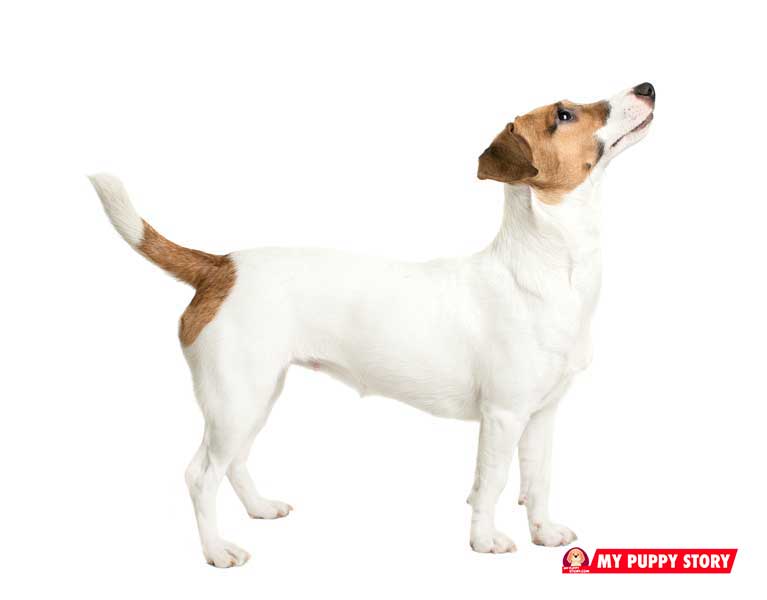
Originally bred for the task of ‘bolting’ (flushing out) a fox from its underground den, the Jack Russell has a feisty temperament with no lack of intelligence, pluck and determination.

The Jack Russell makes an excellent family pet, and a lively house watchdog with a penetrating and persistent bark.

A word to the wise: the veterinarian and author Tracy Acosta warns, “Without an outlet for their boundless energy these cute little dogs can be, as she puts it, “Demons in dog suits.” They are surely dogs for the active and young at heart.

Swimbridge Village & St James Church

Prettily set in a fold of rolling Devon hills on the Barnstable to South Molton road, Swimbridge is associated with a bridge mentioned in the Domesday Book of 1086.

The ancient church of St James, a 15th-century rebuilding, well worth a visit in its own right, has an even earlier original tower that dominates the village.

The interior is a well-kept secret for the connoisseur of the ancient English parish church, with a beautifully carved (c.1490) stone pulpit, one of the finest rood screens in Devon of the same date, and a most unusual 16th-century font.

The Jack Russell Inn

The contemporaneous Jack Russell Inn is an excellent place to stay when exploring the area, not only for its food and comfortable accommodation in an idyllic setting, but for its fine ales and Devon cider.

Upholding the best traditions of a Devon inn, with excellent local fresh fish and shellfish from the nearby North Devon coast on the menu and cooked to perfection, there is also succulent meat and dairy produce from the nearby lush farmland meadows of North Devon.

Why not visit and nail down the past of your beloved Jack Russell terrier at the same time?