Cocker Spaniels: The Differences between the English and the American

mypuppystory.com

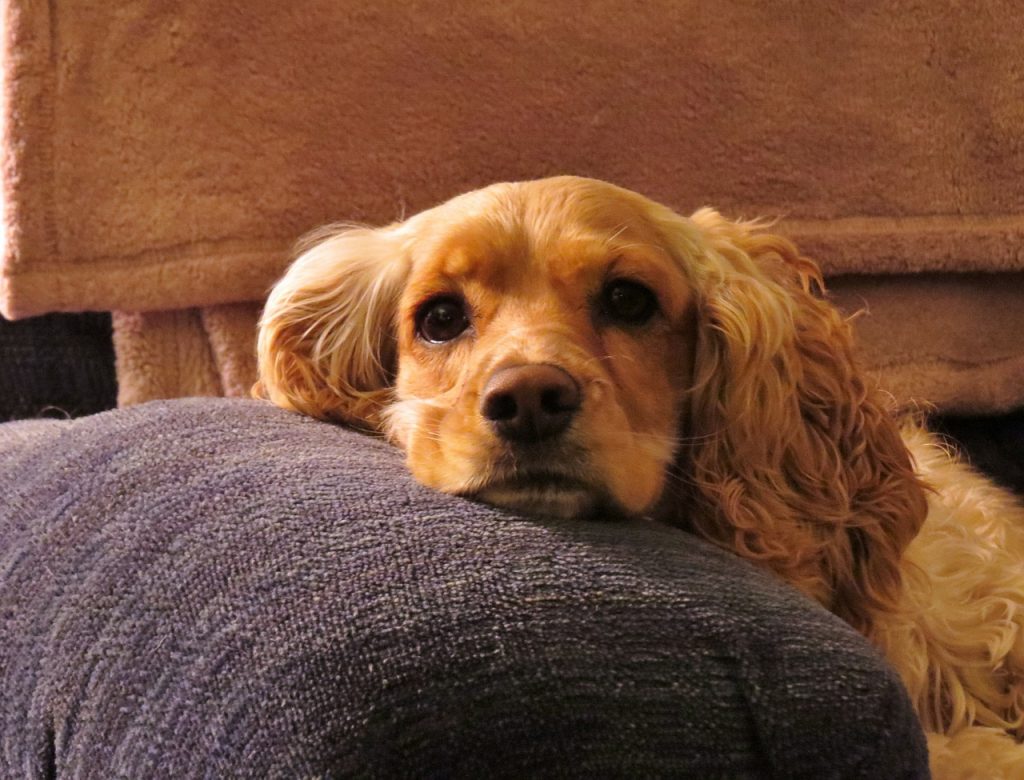
Cocker spaniels are small sporting dogs that come in two “flavors”. One is long-haired and American. The other is sporty and from the UK.

Cocker spaniels are the smallest of the working land spaniels. The English springer spaniels were the largest of this family, while the field spaniel made up the middle sizes. At one time all three sizes could be found in the same litter and were registered according to size. Today, the cocker spaniel has been split into two separate breeds, one evolving in the United States and having long, flowing hair, and the other evolving in Britain and remaining relatively similar to the field and springer spaniel breeds.

The two breeds have a similar origin in these smaller spaniels, but the American cocker has evolved as a much more glamorous dog, greatly loved by the dog show fancy. The English breed still maintains a working-type in addition to its feathery show-type. It is because of these differences that appeared in the breed on both sides of the Atlantic, that the two have been split into separate breeds.

The American Cocker

The American cocker spaniel is known as the cocker spaniel in the United States, because to Americans, this is the cocker spaniel. The American Kennel Club recognized the cocker spaniel breed in 1878 in the early years of the American dog fancy. The breed was imported from Britain, where it had been used to flush game birds that ran into deep thickets. Among these birds were the woodcocks, and the cocker got its name for being a specialist at flushing woodcock. The American fancier had no real use for the dog as a flusher of game.

The American Type Evolves.

That task was left up to larger springer spaniels, field spaniels, and Sussex spaniels, which were also being imported. The American water spaniel and the Boykin spaniel could also be used as a flushing spaniel. The vast majority of cockers imported to the United States at this time became family pets and show dogs. The really long hair on the American cocker did not become established until after the Second World War, but the American cocker always had a broader skull than the English. It was decided that it would be a bit shorter in the leg as well. American cockers are generally not used for hunting, but a few fanciers are trying to develop it back into a flushing spaniel. A few individuals exist in certain lines that lack the really long coat of the modern show cocker, and these are much sought after for those wanting this breed to be a hunting dog.

The English Cocker

The other breed of cocker spaniel is the English cocker, which is called the cocker spaniel in the rest of the world. It is called the English cocker because its breed type was established in Britain. It resembles a smaller version of the field and English springer spaniels to which it is closely related. It has a longer muzzle and copious feathering on its legs and feet, but this spaniel’s feathering is less profuse than the American cocker. The English cocker was first separated from the American in the United States. In 1936, a meeting was held in Bryn Mawr, Pennsylvania, to create a separate registry and standard for the English-type cocker.

Finally Separated

The two breeds remained the same breed until 1938, when the English cocker club made a rule that no member of the club could breed an English-type cocker to an American-type cocker. The English cocker was then separated off as its own breed. English cockers occur in working-type form, as well, which is lightly built and in various colors. It resembles the working-type springer spaniel. English cockers tend to be more responsive to training than Americans, but red English cockers are prone to a condition called avalanche of rage syndrome in which the dog attacks without warning. This has been a problem in some lines of English cockers and springers

Dog Training with the Gate Exercise

mypuppystory.com

Once you have brought home your new dog or puppy, you should strongly think about enrolling in a dog/puppy training course. Not only will it give you the confidence to handle your dog/puppy effectively, but training classes are the ideal place to socialise your dog. When you’re out walking your pooch, other dog walkers may not be so keen to socialise then.

If you can’t make it to a dog training class or there is a bit of wait until the next course starts, you can try this basic exercise to instill some obedience into your dog. It is called the Gate Exercise.

Gate Exercise

Follow these steps in order. Remember to take your time and remain calm.

  1. Dog and handler approach the gate. Get close enough to the gate so that the handler can easily reach to open it.
  2. Handler to tell the dog to sit. Remember the dog must be close enough to the gate so that the lead/leash does not go tight when the handler goes through the gate. A tight lead/leash will encourage the dog to move with you.
  3. Handler to open the gate and let it swing open.
  4. Handler to tell the dog to wait, give a hand signal (most handlers use a flat hand signal) and turn towards the gate. Remind the dog to sit and wait and put one leg through the gate opening. It is necessary whilst the dog is learning what we want, to hesitate and give the command again. If needed, the handler could give a treat at this point.
  5. When the dog is settled, the handler tells the dog to wait again and moves the other leg through the gate. Again, if the dog moves, handler stops moving and commands the dog to sit again.
  6. When the dog is sitting and waiting, (it may only be for 1 or 2 seconds) handler will call the dog through the gate and praise and reward treats.
  7. Once the dog has practised sitting and waiting to come through the gate, we can then add the final element to the exercise. This would be to ask the dog to sit again when through the gate and wait whilst the handler shuts the gate.

With this exercise, it is very important to start slowly. The dog will probably get excited by the handler’s movements, but the handler needs to stay firm and calm.

You can use any gate with this exercise. It can be a garden gate or even an indoor baby gate. Make sure there is plenty of room on both sides when you practise. Getting the gate exercise under control is extremely helpful when you have visitors at the front door or when you’re getting ready to go out. The dog will respond to the commands of ‘sit’ and ‘wait’.

Good luck!

High-Maintenance Dog Breeds: From Grooming to Exercise to Training, Some Dogs Require More Effort

The low-down on specific dog breeds known to be high-maintenance in terms of training, exercise and activity level, grooming and health care issues.

All dogs are not created equal. Some dog breeds are smarter, some are easier to train, and some lazy couch potatoes are perfect for anyone who wants a playful companion but not a jogging buddy. Some dogs will happily retrieve your slippers; others will be just as happy to chew them to shreds and then get sick on your favorite rug. When it comes to dog care, too, there is a real difference between the breeds.

High Maintenance Pooches

Certain breeds of dog require more time and effort to train and exercise. Others have complicated needs when it comes to grooming and keeping them healthy.

Read on for some of the most time-consuming dog breeds.

High-Energy Dogs: Training and Exercise

Most dog breeds were developed with a particular “job” in mind: terriers for hunting, Labrador retrievers for retrieving during the hunt, huskies as sled dogs, Rottweilers to herd and guard. Many of these energetic, driven breeds are simply too smart and exuberant to make good pets unless they are given adequate training and exercise. A few examples include:

Husky – Strong and energetic, the husky was built for cold climates and endurance on the trail. These dogs need plenty of exercise and space to run.

German Shepherd – Shepherds of all kinds have been used around the world to help herd animals. These animals can become neurotic or badly behaved if they are not given enough mental stimulation and exercise. German shepherds in particular are driven to find a “job.”

Border Collie – The border collie is a very smart, active dog bred to herd sheep. Without enough stimulation, they sometimes turn to bad behavior like “herding” their families (especially kids).

Thick-Coated and Shedding Dogs: Grooming Needs

Some breeds have long, thick fur that grows out long, requiring frequent brushing, bathing, and haircuts. A few examples of long-haired and thick-coated dogs:

Old English Sheepdog – Bred to withstand cool temperatures, the sheepdog has a huge amount of fur! It requires frequent brushing to keep this beautiful coat in good condition.

Poodle and Poodle Crosses – The poodle has a non-shedding coat that continues to grow out, requiring occasional brushing and clipping every few months. Poodle crosses, including the trendy labradoodle, cockapoo, and bichonpoo usually get the poodle fur and need to be groomed and trimmed.

Dog Breeds with Special Health Concerns

Every dog will eventually face health challenges as they age, but certain breeds are especially vulnerable. It’s a good idea to do some research before bringing home a pet, to be prepared for risks associated with that breed. A few of the dogs known for health challenges include:

Shar Pei – The shar pei and other wrinkly-faced dogs, such as the English bulldog, are susceptible to infections of the characteristic wrinkles on their faces. The skin needs to be cleaned and checked thoroughly to prevent problems.

Rhodesian Ridgeback – The ridgeback has a characteristic “ridge” of hair along the spine that grows backwards, counter to the direction of the rest of the fur. Unfortunately, this beautiful adaptation is linked with spine abnormalities – so breeding for the “ridgeback” quality has created a breed with frequent back problems.

Inbreeding by puppy mills and irresponsible backyard breeders has created new health concerns in otherwise healthy breeds. Because of their popularity as family pets, Labrador retrievers and German shepherds have become somewhat inbred in the past decade and now are at risk for hip dysplasia.

A high-maintenance dog doesn’t have to be a burden, but it is a good idea for any prospective dog owner to know the good and the bad about their breed before adopting a pet.

How to Enjoy Your Puppy: Managing a Puppy Can be Easy! Keep him Safe and Your Home Safe!

Having a puppy is filled with challenges. As fun as they are, they can be destructive machines. But there are ways to simplify the problem and save you and family grief.

The first rule of puppy training is safety. That means for you and your home, as well as the dog.

Most owners have their first wake-up call when they return home and the dog has chewed a shoe, eaten a Persian rug, or munched on the wall. That is what puppies are hard-wired to do. Not only does that cause destruction; it can also make a sick little doggie.

The best way to leave a puppy unchaperoned is to place him or her in a crate.

Before you argue that it is cruel, think like a dog. Dogs are den animals, and a crate represents a safe place for them. It is small and manageable. They are not required to secure or mark the perimeter. They can go inside and experience downtime. As sentries, they are permanently on guard duty; this is the exemption.

For you, it is a place where you and your dog will be safe. You needn’t worry that he got into trouble, ate poisonous plants or escaped from the yard.

For more on crates and crate training, please visit the web for any number of sites. I like the Idaho Humane Society at http://www.idahohumanesociety.com/caretrain/crate.html

Chew Toys, Not Me!

Puppies are lovely to play with but it is annoying and painful when they bite people and dangerous with elderly and small children. It is a habit that needs to be discouraged instantly.

First, allow your dog a few toys; make sure that NONE of them is a shoe or sock, or any other item that can be confused with some like article that you would not want him to chew on. Keep them in a box in the family room that is all his. Let him know that any article in that box is okay.

And when he begins to chew on something or someone inappropriately, you can gently offer him a safe and approved alternative from his box. Then praise him for taking the toy.

Praise is the best tool in your arsenal. Dogs respond well to praise. It makes the difference in the same way that it insures that a child will repeat positive behavior.

After performing this little exchange and repeatedly taking him to the box of toys, you will eliminate much of the unwanted behavior. Teach all members of the household this trick. Consistently rewarding the good behavior after exchanging the one item or person for the toy is key!

Training is Communicating with your Pet

A sensible training program which does not involve clicks or treats is essential. Don’t end up unhappy; do this! More disappointed owners drop their scorned pets off at shelters because they fail to take the necessary classes. Treats make fat animals. Clicks – where is there a click in nature? Praise and correction, along with consistent messages, are the most successful training there is.

In one ten-week, comprehensive class, you can achieve off-leash success with your dog. You can do this! Check the Dog Obedience club in your area to find a really good class at a good price. That is the best way to learn to communicate with your dog.

One of the first things new owners do with their pets is tell them to sit down. Which is it? Sit or down?

Training is choreography mixed with verbal cues. This is a relationship you will have for 12-15 years, so why not enjoy it for all its worth? Your relationship with a trained dog that can go everywhere with you is going to be so much more rewarding. Don’t leave your pet neglected in the backyard because he is not trained.

As a new pet owner, you have a great future relationship in your hands.

How to Teach Dogs to Obey: Tips for Establishing Leadership and Boundaries with Your Dog

When you don’t set boundaries and let your dog know you’re in charge, you struggle with behavioral problems. A happy dog has boundaries and respects you as the boss. 

It’s easy to fall in love with a new puppy. Too often, when that sweet puppy grows into an unruly dog, owners can feel overwhelmed, trying to get their dog to obey them.

Most often behavioral problems in dogs stem from a lack of leadership and boundaries. Realize that dogs are pack animals where someone has to be in charge. If there’s not a clearly defined leader in the home, then the dog assumes she (or he) is in charge.

Put Yourself First

Putting yourself first may seem selfish, but if you let your dog control you, you’ll build up resentment and she will soon assume the role of leadership in your household. Even worse, your family will feel neglected.

How to Establish Leadership

Leadership simply means you, as the owner, tell the dog when it’s time for an activity, and not the other way around.

Eating routine – Rather than offering an all day cafeteria, you decide when your dog should be fed. When she finishes, pick up her food dish, placing it out of reach. Then, when it’s time for that second meal she should be hungry. This also works in potty training. If you let your dog eat at will, anytime of the day, you won’t be getting her into a routine, but will be at her mercy for whenever she needs to go outside and relieve herself.

You eat first – By your dog seeing that you eat your meal, before she’s served, she sees that you are in charge. Give her dog food and not elaborately prepared human meals. It’s actually better for her.

You initiate playtime – If your dog initiates playtime, ignore her. That’s not to say you don’t play with her because quality playtime is important for bonding, as well as exercise. However, you, as the leader, should be the one to instigate it. Notice when she’s sitting quietly and not begging for attention. That’s the time to toss her a ball and play.

Sleeping arrangements – Your bed belongs to you and not your dog. If you’re sleeping with your dog, it’s not a good idea for either of you. Set up her own personal doggie bed and if she tries to jump in bed with you, lovingly and firmly place her in her own bed. In fact, she actually prefers her own sleeping quarters.

Greeting and jumping –It feels good to know you’re loved and get a warm reception when you walk through the door. However, if you let your dog jump up on you, you’re teaching her bad habits and she’ll jump on guests that visit. When you first walk through the door, don’t give her eye contact at first. If she jumps, turn your back and fold your hands, ignoring her. Then, when she sits and settles down, praise and greet her.

Don’t Baby Your Dog

Smaller dogs tend to be babied more than larger ones. Babying your dog may include dressing her up in doll clothes and treating her like a doll or human baby. Pampered dogs are spoiled dogs, which are not happy pets, because they fail to get along with people and other pets.

Finally, learn all you can on dog obedience techniques. Before you feed or play with your dog, first have her sit. Also, take advantage of informative television programs, such as Animal Planet’s “It’s Me or the Dog”, which incorporates many of these principles. You’ll enjoy your pet much more once boundaries are set and your dog knows you’re the boss.

Miniature Australian Shepherds: Mini Aussies Make an Attractive, Entertaining Family Pet

Although this breed is not common, the Miniature Australian Shepherd has many qualities that a family would find attractive in a pet.

Attractive, intelligent and energetic; mini Aussies are big companions in a small body. The personality of the mini Aussie endears it as much as its teddy bear like appearance.

Physical Description

Miniature Australian Shepherds or mini Aussies are smaller versions of the Australian Shepherd. These dogs usually grow to be between thirteen to twenty inches high and fifteen to twenty pounds. Mini Aussies have a medium length coat that may be blue Merle, red Merle, red tricolor or black tricolor.

Disposition

Mini Aussies are active dogs who love to play. Families with small children will love these dogs and these dogs will love small children. Loyal and loving, these dogs bond well with familiar people. Dog experts recommend that mini Aussies are well socialized as puppies to prevent them from becoming aggressive with strangers.

In order to keep this intelligent breed out of mischief, regular physical activity is necessary. Agility training is an activity that will harness the mini Aussie’s boundless energy and quick mind. Other recommended activities for this breed are herding and Frisbee competition.

Health Issues

The Miniature Australian Shepard may be prone to developing a few physical conditions. Hip dysplasia, some eye conditions, and a genetic condition often called Lethal White are potential conditions which may affect the mini Aussie. Hip dysplasia is an inherited deformity. Examination of the hip structure at a young age should detect such deformities. Common eye conditions include corneal dystrophy, distichiasis, or ectopic cilia. These conditions generally do not cause blindness and may be treatable.

The condition of Lethal White is a genetic condition resulting from the breeding of two Merle colored shepherds. Although not every breeding between two Merles results in this disorder, the result is serious when it does occur. Animals with this condition have a high probability of having blindness, heart and liver conditions.

Breed Clubs and Registries

The American Kennel Club (AKC) does not recognize these little dogs as unique from their larger Australian Shepard relatives. However, several organizations do recognize these dogs. The North American Miniature Australian Shepherd Club of the USA, Inc (NAMASCUSA) provides a great deal of information about this breed. Another organization that has a registry for mini Aussies is the National Stock Dog Registry (NSDR.)

The organization, NAMASCUSA , maintains a database of breeders of this adorable breed. Interested individuals may contact this organization to find a breeder of mini Aussies.

The Miniature Australian Shepard is a dog worth researching for a family pet. Small in size but large in personality, the mini Aussie would be an ideal choice for a family looking for an energetic pet.

Newfoundland Breed Profile: Gentle Giant, Water Rescue Dog and Family Pet

Newfoundland

The Newfie is one of the sweetest and largest dog breeds in the world. Find out if a Newf is right for you and your home.

History

Nobody is sure of the Newfie’s exact origin, but the English first discovered this dog breed while exploring the Canadian island of Newfoundland in the 1700s. Some were brought to English estates to live as companion dogs, a natural role for such a noble-looking and loving animal. Other Newfs fit in just as well on the sea, where they proved their nobility of spirit by working as a water-rescue dog. These dogs gained a reputation for heroism after saving the lives of many sailors, in one instance including an entire ship’s crew.

Sir Edwin Landseer painted heroic portraits of Newfoundlands and favored the unusual black and white type. His famous paintings gave black and white Newfs the name “Landseers”.

Personality Traits

Newfies are sweet, loving “gentle giants”. Sometimes these dogs are so devoted to their masters that they can’t adapt to a new home and family. They range from mid-level energy to lethargic, and older Newfs may need encouragement to exercise. Newfoundlands are great with kids and strangers, and are generally friendly towards other dogs. However, if a Newf perceives danger, he or she will loyally defend its master.

When it comes to training, this breed responds best to kind guidance. Newfies are very sensitive and too much negativity can result in hurt feelings. They are extremely intelligent dogs, so a little praise and motivation can go a long way.

Appearance

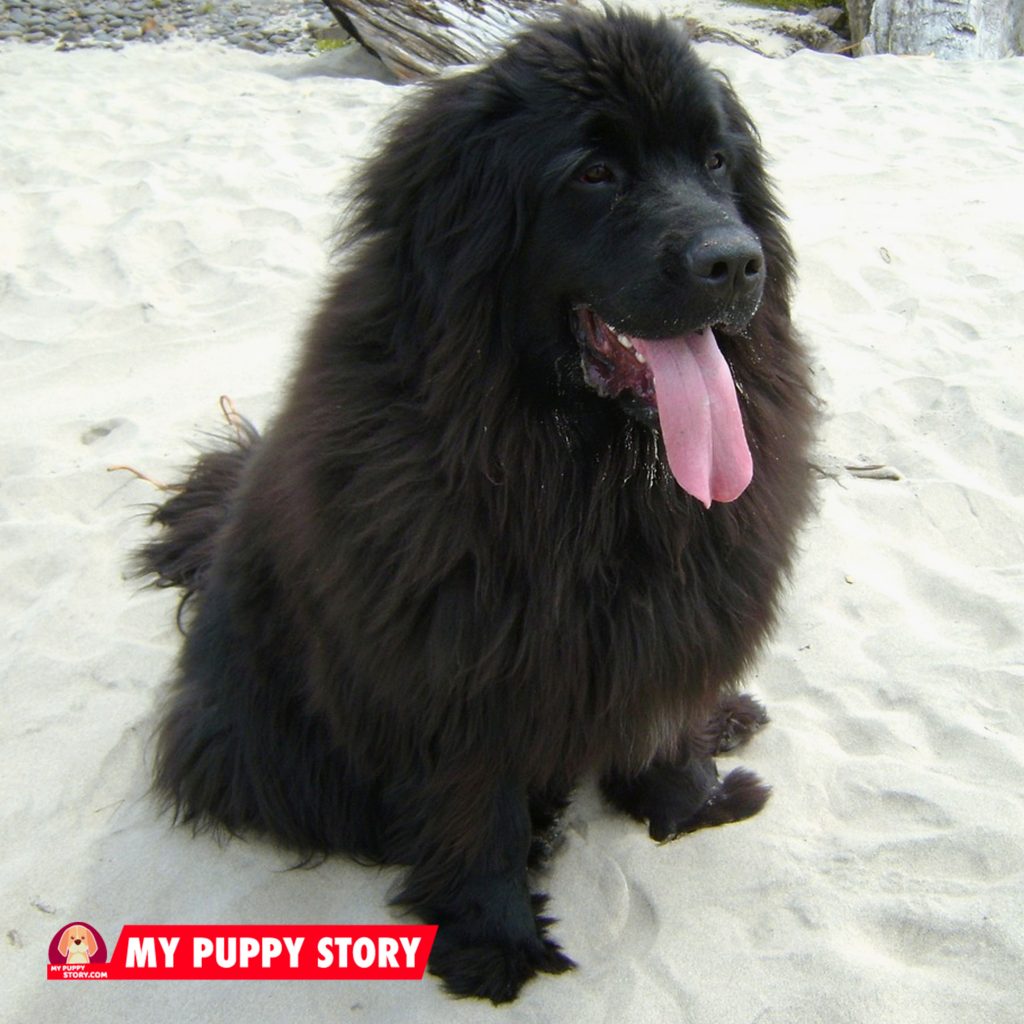
The standard Newfoundland is tall (26-28 inches) and has a solid build. Males are typically around 150 lbs, while females average around 120 lbs. Most often they are black, but may also have brown, grey, or black and white (landseer) coats. Their fur is water resistant and double-layered. This in combination with their webbed feet makes them excellent swimmers. Newfies’ heads are large and square, and they have floppy ears. Some have dry mouths, but most are prone to drool.

Health and Upkeep

Responsible breeding practices can help ensure Newfoundlands stay healthy. Hip Dysplasia is a common health concern, so owners should try to ensure their puppies stay at an appropriate weight. Additionally, having the puppies’ hearts checked beforehand ensures that they are in good shape before they go to their new homes.
Providing a Newfoundland with appropriate care is essential to ensure they stay healthy and happy. Exercise is very important, particularly if they live indoors or in a small area. Additionally, it’s ideal to have a shaded area for them to sleep, provide plenty of cool water, and access to air conditioning if you live in a hot climate.
Taking care of a Newfoundland’s double-layered coat can be an enjoyable experience. Frequent brushing for their coat is highly recommended, and a professional cut can improve its texture in warmer months (or year-round to make upkeep easier). This will help ensure your pup looks and feels great all the time!

Considering a Newfie

Adopting a Newfoundland into your family is an incredibly rewarding experience that brings many years of joy. Not only must you provide lots of love and care for your pup, but also be financially prepared for regular groceries, grooming appointments and medical fees. Ensure that you have the stability to provide a loving home to your new furry companion for the rest of its life (usually about 10 years), so that both of you can cherish these moments forever.

It is always best to visit a breeder and meet your potential pet before finalizing your decision. Make sure to play with some adult Newfs as well, to truly understand the size that your puppy will one day become.

Pros and Cons of the German Shepherd Dog: Significant Characteristics of This Popular Breed

If you are considering a German Shepherd Dog (GSD) there are a few pros and cons to examine. These relate to the strong characteristics of the breed.

It will depend on you and your personal circumstances whether each feature is to be considered positive or negative. Correctly bred, raised and handled the GSD is a wonderful pet, gentle, good natured and beautiful. It is worth emphasising from the start that this is a larger breed, a fact that will soon become apparent in expenses such as food and veterinary care, so you must be confident of being able to meet these needs financially. We now consider other pros and cons of the breed.

Pro: They are Active Dogs That Love, and Really Need, to be Part of Family Outings

The GSD is a breed that loves the outdoors, loves travelling in the car, and loves going places with his family. The dog wants to be included whatever the daily plan and will show his enthusiasm with a wagging tail and a happy expression. With his rugged coat the breed enjoys all weather exercise, but it’s best for your house and the dog to rub him dry afterwards! If you are happy to take the dog out regularly this breed is ideal and you will have a lot of fun together.

Con: They are Active Dogs That Love, and Really Need, to be Part of Family

If you are looking for a dog that is content to spend about an hour an evening with you and then toddle for five minutes around the block, the GSD will not suit. The dog thrives on activity, playing and interacting with his owner. These are dogs that will be upset by a lack of involvement, and will not tolerate being shut in the house alone most of the day while you go out.

Pro: They are Natural Guard Dogs and Require no Training to Actively Protect Their Home

Once settled into his home a GSD will be instantly alert to anyone nearing ‘their’ house. They will warn you of the approach of strangers with an extremely loud and imposing bark, and a GSD in such full cry is very off putting for anyone with less than good intentions! The reaction is completely instinctive, and does not need to be trained into the dog nor encouraged. If anything the zeal of the dog may need to be checked.

Con: They are Natural Guard Dogs and Require no Training to Actively Protect Their Home

If you find the noisy, repetitive bark of a dog extremely grating, you are likely to be severely tried by the GSD. They are very vocal, very loud and particularly so whenever someone approaches the house. Anyone who does find barking hard to tolerate and has a lot of visitors would have very little peace! Also anyone with friends and family who are nervous of dogs may find that the welcome they receive if they only visit occasionally is too off putting for them. Not everyone wants a guard dog.

Pro: They are Intelligent Dogs and Learn Very Fast

Training a GSD is a pleasure and may make you feel you have discovered a hidden talent for working with dogs! They quickly get the idea and are eager to please. With clearly spoken, consistent phrases and a few snacks as a reward the standard commands should pose them no Problems. If correctly introduced to the concepts they will also housetrain and learn other positive standards of behaviour very quickly. Get experienced advice if you feel your Shepherd is difficult to train and have the expert watch you and your dog interact- there is a possibility that the fault could be yours!

Con: They are Intelligent Dogs and Learn Very Fast

If you are not careful your clever dog could end up training you. A typical example is allowing your puppy to pull you everywhere on the lead. He will learn that he dictates where you go and how fast- and it’s not so cute to be towed about when he is adult! He will also learn that jumping on you gets attention, that you won’t interfere with his food if he growls… a broad spectrum of undesirable behaviours can develop as your dog learns how his behaviour influences you. There are few breeds more adept at owner training than the GSD, with the type of brain that needs to be occupied or which will soon conceive mischief. The breed is best suited to a sensible, kind but firm owner who will consistently draw the line for them and gently enforce it.

Pro: They are Popular Dogs

If you want a GSD you won’t have to search for months or join a lengthy waiting list unless you want a dog from a particular bloodline or breeder. They are popular because of their desirable combination of beauty, courage and intelligence, and you should be able to find a breeder or someone with a dog to re-home near you. Contacting the Kennel Club and making general internet searches as well as keeping a watchful eye on the local free ad papers should soon produce a likely candidate.

Con: They are Popular Dogs

The popularity of the GSD has been their downfall. Intensive and careless breeding has resulted in inherited genetic defects such as hip dysplasia and haemophilia A. These remain rife in animals that have not been carefully bred with a mind to these problems. There is also some debate over the body type of the GSD with the working bred dog tending to be more level along the back with straighter hind limbs whereas the show bred dog exhibits a distinct downwards slope towards the hind legs. An Internet search will reveal kennels that are dedicated to each type and you can make your choice based on your own preference.

This is a wonderful breed, deserving a similarly wonderful home and owner. Make your choice carefully and after thorough research if the GSD appears on your dog shortlist.

Rally Dog Obedience – Fun Twist on Training: AKC Competition Emphasizes Communication over Precision

Rally obedience requires dog and handler teams to perform a wide variety of short exercises on a timed course and emphasizes teamwork between dog and handler.

The AKC introduced Rally Obedience as a titling class in 2005 as a stepping stone between the companion obedience necessary for a Canine Good Citizen (CGC) award and more formal obedience and more active agility competitions.

The new classes have been a huge success, with entries frequently hitting their numerical limits in the first year of competition. Rally exercises resemble competition obedience exercises only sliced, diced and re-combined into bite-size stations along a course which varies from trial to trial.

Unique Features of Rally Obedience

Rally is less formal, and for most competitors, more fun than traditional competition obedience. It offers a link between everyday companion obedience and more advanced competition obedience. Dogs are not required to hold stays at a distance from their owners or work in close proximity to other dogs. Handlers are allowed to talk and gesture to their dogs throughout the course and point deductions are not taken for minor errors, although errors deemed over 1 point in severity are scored. Handlers are allowed to re-perform stations if they are unhappy with the way they performed it the first time, although they do take a point deduction for doing so. The course is timed, but time only comes into play if it is necessary to break ties for the top four class placements.

How to Get Started in Rally

Your dog should have some knowledge of basic obedience before starting a Rally Class. He should be able to heel or walk reliably on a loose leash, come when called, and understand the sit, down, and stand commands. These commands will be used in many different permutations in Rally; a big part of the training is to teach the dog to perform each exercise correctly, but also to pay close attention so he can be ready for anything as he moves to the next station. Contact local AKC show and training clubs to find Rally-specific classes in your area.

The most important element to understand in learning Rally is for the handler to know the signs. All of the exercises are short and most are simple to perform, but with 50 different station possibilities, the nuances between exercises are important to understand! Subtle differences in exercise names make big differences in the way a station is performed and scored. Take time to discuss the exercises with experienced exhibitors, trainers, or judges to make sure you understand the nuances of each sign before you compete.

Levels of Rally Obedience Competition

There are a total of 50 different exercises that can be used in Rally and the course exercise selection and design for each trial is at the judge’s discretion. Thirty one of the exercises can be used at all levels, with the more difficult exercises and those requiring jumps reserved for the higher levels. The number of exercises increases at higher levels as well; the maximum number of stations in a Rally course is 15 for Novice, 17 for Advanced and 20 for an Excellent course.

Achieving AKC Rally Titles

A dog-handler team needs to receive 3 qualifying scores at each level in Rally to receive a title. Qualifying scores are 70 or more points out of a total of 100; all teams start with a perfect score and deductions are taken for errors in the performance.

Other Rally Organizations

In addition to AKC sponsored Rally competition, there are several other organizations that sponsor Rally competition and titles, including the Association of Pet Dog Trainers (APDT) and Canine Work and Games (C-WAGS) organizations. The competitions are similar but each has some unique exercises and features to investigate.

Schnoodle Dogs: Information on the Schnoodle Dog Breed

Schnoodles are incredibly intelligent animals and make wonderful pets. Learn more about the Schnoodle breed and where you can find a schnoodle puppy of your very own.

As you may have guessed, the Schnoodle is not a pure bred dog. It is a cross between the Schnauzer and the Poodle. They are small, highly intelligent dogs that make great pets for families with children as they love to play and be cuddled.

Schnoodle Breed Statistics

Schnoodles range in size, depending on the size of the parents. The most popular size of Schnoodle is the miniature Schnoodle, which ranges in size from 10 to 15 pounds. You can also buy midsize Schnoodles, which can grow up to 60 pounds. Schnoodles’ coats come in many different colors – Solid colors such as black, white, tan and sable, as well as mixed colors too.

Schnoodle Temperament and Behavior

Schnoodles are quite active dogs, even into old age. They love to jump, run, walk, play and everything in between. They love to go on walks but you don’t have to worry about following a rigid walking schedule as the Schnoodle will enjoy getting exercise in any way that it can, whether it be running around the backyard or running around the kitchen table. While they do have an active nature, they also enjoy settling down with you on the couch for a good nap or some relaxation.

Schnoodles make great family pets as they love children, get along with other dogs and are incredibly loyal animals. They will be happy living almost anyways, whether it is a farm or an apartment, as long as they are with their family. With this being said, they would not enjoy being outdoor dogs as they need to be with their family. They are also very curious animals and love playing with and chewing on their toys (but not the furniture!) In the end, they are just highly affectionate friends that loved to be hugged, kissed and cuddled.

They also make good guard dogs. Back in the day, large Schnauzers were bred as guard dogs, so the Schnoodle still has some watch dog in its blood. They will definitely let you know when someone is near, but they are non-aggressive animals. They are highly protective of their family making them vocal when “intruders” come into the house. But overall, they are usually not yappy dogs.

Schnoodle Training

Schnoodles are clever, extremely intelligent dogs that train very easily. In fact, most schnoodle puppies can be house broken in a matter of days with very few accidents in the house.

Training is very easy with the help of some treats. They easily pick up on the meanings of words and will continue to learn new tricks and words into old age. Schnoodles can be taught a variety of tricks and will generally listen to you when you talk to them. They will pick up on which rooms of the house they aren’t allowed in, what toys are theirs and won’t chew on your furniture.

Schnoodles are Hypoallergenic

Schnoodles have soft, fluffy dog hair, not fur. This means their hair needs to be groomed weekly and clipped every six to 12 weeks depending on the desired length. Since they do not shed hair and lose very little pet dander they are also hypoallergenic. This is a huge selling aspect to people with dog allergies but still want to get a dog.

Schnoodle Breeders

The popularity of the Schnoodle breed has increased immensely over the last few years. As soon as someone sees one for the first time they instantly fall in love and ask where they can find Schnoodle puppies for sale. The puppies can be purchased in general pet stores as well as directly from a breeder. You can find Schnoodle dog breeders online where you can look at pictures of puppies for sale.