Pembroke Welsh Corgi Information: Pros and Cons of Choosing a Herding Breed

Pembroke Welsh Corgi

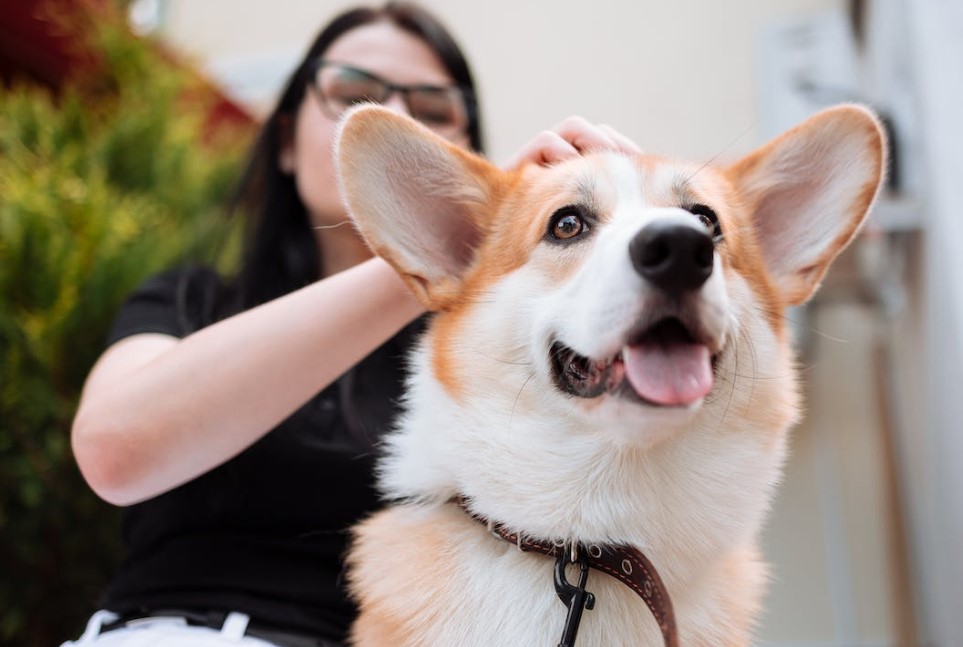
The Pembroke Welsh Corgi is so named because the breed is supposed to have originated in Pembrokeshire, Wales. Corgis, though small in height, are herding dogs with big personalities and a very athletic nature.

Breed Characteristics

Corgis are often described as a “big dog trapped in a small dog’s body,” and this is an accurate description. As for size, a corgi will only grow 10 to 12 inches high at the shoulder and 12 to 15 inches long. Males weigh between 25 and 30 pounds as adults, and females weigh 20 to 27 pounds. Their head and ears are foxy in shape, and tails are either naturally short or normally docked. There is a movement to not dock tails, so sometimes, Pembrokes will not have docked tails.

Pembroke Welsh Corgis come in a variety of coat colors, including red and white, sable, fawn, and tri-color. The dogs have varying markings of white on legs, chest, collar, muzzle and forehead. The breed standard considers a short length coat as standard, although there are “fluffy” corgis with long hair. This is considered a flaw, and fluffies are not eligible for showing, but they are perfectly acceptable as pets, and are often quite adorable. Pembroke Welsh Corgis do shed a lot, however. They have a soft undercoat which sheds all year round and has twice-annual seasonal shedding that can be annoying. They also have a coarser overcoat, which also sheds.

Because corgis are prone to back problems due to the length of their spine and the fact that they are voracious eaters, it is important to make sure not to overfeed a corgi and allow it to maintain and active lifestyle. The dog should be lean, with definition in the body and haunches. You should be able to feel the ribs under the fur, but there should be a layer of muscle or fat above the ribs. If you cannot feel the dog’s ribs, it is likely overweight.

Corgis are also prone to genetic hip dysplasia and various eye disorders. Life expectancy for Pembroke Welsh Corgis is 12 to 14 years old if a corgi maintains a healthy lifestyle.


Positives to Owning a Pembroke Welsh Corgi

  • Corgis are very intelligent and easy to train, so they make excellent working dogs and learn lots of tricks and activities. You will likely be able to teach your dog tricks like play dead, roll over, and teach it to fetch a ball.
  • Corgis are cheerful, happy, and eager to please their owners. They often like people and will likely be friendly to those they know.
  • They are compact and do well in apartments, although they do require regular exercise.
  • They make excellent alert dogs, because they can be protective of their owners.
  • They are too short to jump onto high furniture, like beds.
  • They excel in agility, tracking, herding, and obedience exercises.
  • They get along with other dogs if socialized early.
  • Very loyal and loving, and cute to boot!

Negatives to Owning a Pembroke Welsh Corgi

  • They do shed a lot, and often, their coats are many different colors, so all of those colors end up on clothing.
  • They can be stubborn and sassy, especially the females of the breed. They need to have strong leadership.
  • Sometimes their protective nature can result in barking at neighbors or at the door. Training will be required to keep them in check.
  • They are intelligent, so they need activities and exercise, or they will become bored and destructive.
  • They will bug you to play constantly.
  • You will not be satisfied with just one. Just ask the Queen Elizabeth II, who owns a minimum of 5 corgis at any given time.

If you are considering adopting a corgi, please be sure to adopt from a reputable breeder or a Corgi Rescue. Please do not support puppy mills!

Managing Guarding Behaviour in Your Dog: Handling Instinctive Guarding in a Pet

Not everyone wants a guard dog and most people do not want a dog that is not sociable enough to be anything but a deterrent to visitors. It is important to lay correct foundations and ensure that your dog’s guarding behaviour is manageable at all times.

Socialise the Young Dog and Encourage a Positive Association with Visitors

It is important to socialise every dog from a young age. Take the dog as many different places as possible when still a puppy or it will be fearful of strange situations. It should meet as many other dogs and people who will provide a favourable or non-threatening response to avoid fear of these as it ages too.

Never worry that allowing visitors to greet and treat your young dog or pup in your home will mean that he or she allows anyone to enter the house in your absence. The dog will be taking a lot of cues on how to respond to strangers from you. When you are relaxed and friendly, your dog will be happy to welcome visitors. If you are not around, the dog will probably react far differently and dogs do tend to be very good at reading suspicious behaviour.

In and out of the house encourage the dog to sit when approached by strangers and to accept a kind and gentle fuss as often as possible. Don’t expect it to put up with being rough-housed by people who approach you both, or allow people to behave in a way that could seem intimidating to your pet. The objective is to encourage polite interactions on both sides, show your dog that you will take the lead in deciding what interactions are to be permitted, and prove that your dog can trust you to make the correct decision in the matter.

Draw Boundaries and Enforce Them Quietly but Firmly

Many dogs will bark at visitors to the house and most people do not find this too objectionable considering it a reassuring response to people at the door. It may be more worrying if this develops into growling, snarling and even nipping. Show your dog where the boundaries are. Never shout at or strike the dog which may only encourage an increasingly excited and aggressive response, but introduce a firm, short command that states enough is enough, e.g. Right! At that point remove the dog from the situation by immediately shutting it out of the room. Only allow it back into the room that the visitors enter when it is quiet and then praise it if it maintains a relaxed demeanour in their presence. Always give the dog a chance to behave appropriately, however you define this. Make sure everyone in the household is consistent with what the boundary is so that the dog is never confused and allowed to bark by one person but expected to meet visitors in silence by another member of the family.


Don’t Allow the Dog to Consider Doorways ‘Their’ Place

Some guarding dogs may display a tendency to rest and sleep in the doorway of your home. They then see this as their bed area, and they will consider it their right to defend it to trespassers. As any owner is likely to have been taught, a dog’s bed is its place and it is not to be disturbed there. This will definitely worsen reactions to visitors that the dog feels are entering its space. Baby gates or dedicated pet gates are useful for restricting access to the doorway if needed.

Warn Your Visitors of the Dog’s Response and Encourage a Positive Reaction from Your Guests

It is unfair not to warn your friends that your dog will bark at them when they visit, particularly if you have a larger dog that they may find intimidating. If you are confident that, as with many dogs, it is purely a vocal response and they will never bite your visitors, emphasize this. When they visit ask that they greet the dog in the friendliest possible way, smiling, talking in a low and calm voice, and importantly, use the dog’s name. This seems to be quite effective in convincing the dog that they are ‘legitimate’ visitors. A nervous visitor and a noisy, defensive dog is not a fair combination to anyone, so practice this with dog-confident friends first.

Get Professional Help if You Feel You are Losing Control

If you do feel that your dog is becoming increasingly antisocial and is rough with your guests or appears to be becoming aggressive, it is time to get advice from a specialist trainer. If you feel that your dog could represent a danger to anyone if he or she ever got loose or if being walked, you have a serious problem on your hands and must get advice to prevent your dog from being involved in an ugly incident.

How to Train Puppies Not to Chew: Easy Tips to Curb a Dog’s Destructive Chewing

All puppies love to chew. Some lose interest as they reach adulthood, but some dogs never kick the habit. Early training can save pet owners frustration, tooth-marked chair legs, and shredded shoes.

Why Do Puppies Chew?

To eliminate destructive chewing, it’s important for pet owners to understand what motivates the behavior. Like babies, puppies who are teething often chew to make their gums feel better. Puppies also are curious like little babies and find chewing a good way to explore the new world around them. Many puppies chew to get exercise. And some chew just because they enjoy it.

Exercise and Mental Stimulation Lessens Destructive Chewing

Pet owners can eliminate a great deal of destructive chewing by making sure their dogs get enough physical and mental exercise. Many dogs chew when they become bored. They’re not doing this to get back at their owners for leaving them alone. They’re just looking for an activity to pass the time.

Pet owners can stimulate their dogs even when they have to be away. Here are a few ideas:

  • Try leaving a stuffable toy with a treat in the puppy’s play pen or crate.
  • Freeze stuffable toys to make the treats harder to extract.
  • Change out the toys left in a dog’s crate for variety.
  • Make a dog work for his dinner by putting food in a dispenser ball.

These are just a few ideas for keeping a dog’s crate time becoming boring. They also offer a little bit of exercise when pet owners cannot be around.


Dogs and Puppies Need Supervision

Dogs can’t be expected to know the difference between a chew toy and a treasured belonging without a lot of training. For this reason, puppies should either be under close supervision or in a crate or play pen.

Allowing a puppy free reign of the home not only invites destructive chewing, but may result in serious injury. Electric cords or sharp household objects can be common targets for a new puppy’s eager jaws.

Puppy Proof to Prevent Destructive Chewing

Pet owners bringing a new puppy into the home will need to puppy proof just as they would for a curious toddler. Valuable items should be put out of reach, and baby gates should be set up to block off areas where family members aren’t able to supervise.

Reward a Puppy fore Chewing on an Appropriate Item

Puppy games often center on ropes and chewy toys. Playing with a puppy provides positive reinforcement for chewing on the things an owner wants him to chew on.

Chew toys are essential purchases for a new puppy, but don’t bring them all out at once. Variety keeps a dog interested. Plus, if a dog has too many options for chewing, he may conclude that anything in the near vicinity is meant to be mouthed.

What Pet Owners Should Do When a Puppy Chews

With most puppies, chewing is inevitable. It’s important for owners to keep their calm and look at the situation from the dog’s perspective.

For example, if an owner has been away for several hours and returns to find a mutilated designer handbag on the sofa, she needs to realize that punishment is futile. Dogs have very short-term memories and are unable to associate their behavior an hour ago with a torn, leather bag, and their owners’ yelling.

Sure, the puppy may slink away in what seems like a guilty manner, but he’s really just cowering at his master’s terrifying new dark side. In the future, this owner will want to remember to crate the puppy while out and put valuable items out of reach.

Another interesting problem occurs when owners actually reward their puppies for chewing without realizing it. Say a dog picks up a sock and heads for his favorite spot under the table. A vigilant owner may spring into action to chase the puppy down and retrieve the object. Unfortunately, the puppy will only interpret this as his favorite game of chase. It’s likely he’ll try the sock trick whenever he wants some fun and attention. In this case, an owner should calmly walk to the puppy and offer a favorite toy in exchange for the sock.

A final error pet owners commonly make is offering their dogs chew toys which look strikingly similar to shoes, or other off-limit items. Some owners actually give their puppies an old shoe and expect them to distinguish between the worn out sneaker and a new one. These types of toys will only confuse a dog and set back the training process.

Now that pet owners are on their way to eliminating destructive chewing, they may also be interested in related articles covering training puppies not to bite, working with dogs to eliminate jumping up for attention and basic obedience commands including sit, stay, and down.

Choosing an Adult Dog From a Pet Shelter: Behavior to Look for When Considering Adopting a Dog

If you’re looking to adopt a dog from a pet shelter, use these tips to choose a dog that will fit with your family, and respond well to dog obedience training.

Mixed Breed Dog or Pure Breed Dog?

Both types of dogs are available at adoption shelters. The benefits of choosing a pure breed are that, to a degree, you know in general what to expect in terms of size (in the case of a not quite fully grown dog), temperament, and potential health issues. It is important to remember, though, that dog obedience is as much a function of training (or lack of it) as breed. While the characteristics of a pure breed dog might be more predictable, shelter pure breeds may have uncertain histories which could include inbreeding.

Mixed breed dogs tend to be healthier due to a lack of inbreeding. Sometimes, the breed of the dog’s parentage is obvious, in which case, the dog will probably have characteristics of that breed.

How to Choose an Adult Dog for Adoption

Julie Fudge-Smith, professional dog obedience trainer with A Positive Connection says, “The most important thing you can look for in your dog is the social drive towards people.” Having a strong social drive in your dog insures that your new companion fits with your family and can protect against potentially serious future problems.

Dog Behavior Indicates Socialization

According to Fudge Smith, when you arrive at the pet shelter and choose a dog to look at, you should first take a few minutes and watch the dog. See if he comes up to you without being asked to. If he does approach you, how does he interact with you? Does he touch you? If so, does he do it softly and gently? Is he interested in talking to you, or does he simply sniff you and move on? Think of each three second interval of interaction that the dog initiates as one point. The more point the dog scores, the more socialized he is.

Be aware of the manner in which the dog carries himself. Is he loose and wiggly? Does he seem relaxed in his environment? Or, is he tense; constantly looking around, and not focused on you? Does he settle down and enjoy your attention? Attention is something he gets little of living in a shelter, so he should be happy that you are there with him. If he’s not interested in being with you, then his social drive is not very high.

The way a dog wags his tail can tell you a lot about him. His tail should be held at middle height (not tucked in, and not looking like it’s sticking out of the top of his head). The wag should be gentle, easy and circular. A frantically wagging tail indicates arousal rather than socialization. Aroused dogs are more interested in the environment than in you. They will sniff around, look for ways out, and pay attention to things rather than people.

Dog Behavior of a Well-socialized Pet

Once you have watched how the dog moves around you, pet him once down the back from the top of his head to his tail. Then, watch how he responds to your touch. Does he move towards or away from you? Does he seek out your touch or does he merely tolerate it? Repeat the pet a few more times and look for a positive response; the dog should move closer for more petting, turn to look at you, or stay where he is for more touching.

Plan multiple visits to your new dog, and bring family members to meet him. Use these tips to help choose a dog that will engage with you, respond well to obedience training, and be a comfortable and loving member of your family.

Fluoxetine for Dogs: Using Prozac® or Reconcile® for Canine Behavioral Problems

Canine behavioral problems are frustrating for owners and are one of the leading reasons dogs are surrendered to pounds and shelters. Fluoxetine is one of the behavior modification medications which may be used to treat dogs for various behavioral problems.

What is Fluoxetine?

Fluoxetine is probably better known as Prozac® when marketed for people. For animals, fluoxetine is marketed as Reconcile®.

Fluoxetine is an antidepressant in the selective-serotonin reuptake inhibitor (SSRI) class. As a SSRI antidepressant, fluoxetine differs from other medications such as clomipramine which act as tricyclic antidepressants and therefore act on the central nervous system through different mechanisms.

Fluoxetine exerts its influence at the pre-synaptic neuron level by inhibiting the uptake of serotonin. It does not act as a sedative.

Fluoxetine is a fairly long-acting medication, with an elimination half-life of 2-3 days for fluoxetine and 7-9 days for norfluoxetine (an active metabolite of fluoxetine).


How is Fluoxetine (Prozac®, Reconcile®) Used in Dogs?

Fluoxetine (Reconcile®) is approved by the Food and Drug Administration (FDA) as an aid in the treatment of canine separation anxiety in conjunction with behavioral modification training techniques. Fluoxetine should not be used solely, without the use of behavioral modification, as the behavioral modification training is the process by which the dog learns new and proper behaviors, with fluoxetine simply making it easier for the dog to learn the desired behaviors.

Though separation anxiety is the only behavioral problem which fluoxetine (Reconcile®) is labeled to treat, fluoxetine is also used off-label to treat several other behavioral problems in dogs, including:

  • thunderstorm phobias
  • numerous other phobias and fears
  • canine aggression
  • obsessive-compulsive canine disorders

As with canine separation anxiety, when used to treat any other canine behavioral disorder, fluoxetine is best used in conjunction with behavioral modification techniques.

Because fluoxetine takes approximately 10 days to reach steady-state concentrations in the blood stream, many veterinary behavioral specialists advocate the use of shorting-acting “rescue” drugs, such as alprazolam (Xanax®) or diazepam (Valium®), to help calm fearful or anxious dogs during times of intense need during the first 10-14 days of treatment with fluoxetine. For instance, a dog owner dealing with a dog suffering from separation anxiety may be advised to administer alprazolam to the dog shortly before leaving the dog alone in the home to produce sedation for a short period of time, allowing the fluoxetine blood levels time to reach an effective level.

Potential Drug Interactions with Fluoxetine

Fluoxetine is known to interact with other drugs and may enhance or interfere with the effects of these medications.

  • Fluoxetine may increase the half-life of drugs such as diazepam and alprazolam, making them more effective for an extended period of time.
  • Fluoxetine may increase the extrapyramidal effects of haloperidol.
  • Fluoxetine may increase the blood levels of lithium.
  • Fluoxetine may increase the side effects seen with L-tryptophan, tricyclic antidepressants and buspirone.
  • Fluoxetine should not be used in conjunction with monoamine oxidase inhibitors, such as l-deprenyl or selegiline, because the combination appears to result in increased morbidity.
  • Fluoxetine is tightly bound to plasma proteins and its effect on other drugs which bind plasma proteins is unknown at this time.

Potential Side Effects When Administering Fluoxetine to Dogs

Side effects noted in dogs receiving fluoxetine include:

  • lethargy/calmness
  • gastrointestinal effects
  • anxiety
  • irritability
  • insomnia
  • hyperactivity
  • panting
  • lack of appetite

Fluoxetine is known to alter blood glucose levels and it should be used cautiously in dogs with diabetes mellitus.

Rarely, fluoxetine has been found to produce signs of aggression in previously unaggressive dogs.

Using Fluoxetine (Prozac®, Reconcile®) to Treat Behavioral Problems in Dogs

Fluoxetine (Prozac®. Reconcile®) may be used, in conjunction with proper behavioral modification therapies, to correct or treat several behavioral problems in dogs, including canine separation anxiety and other phobias or fears. When coupled with appropriate training techniques, fluoxetine can be quite effective in treating various behavioral issues for many dogs.

How to Train a Dog to Stay When Commanded: Basic Dog Training and Obedience – Teaching Dogs to “Stay”

Training a dog to stay when commanded is a process which requires time, patience and persistence. However, training a dog to stay when commanded is also a fairly simple process.

Training a dog to stay can make managing the dog’s behavior much simpler and easier for a dog owner. By training a dog to stay on command, a dog owner can command the dog to stay and settle down when the dog becomes too active and when the dog is exhibiting undesirable behavior.

How to Train a Dog to Stay – Choosing the Proper Time and Place to Train the Dog

Effective dog training and obedience requires a quiet, calm location where the dog can concentrate on the handler alone, without distraction.

The dog must be calm, relaxed and focused in order to effectively train the dog to obey any command. Do not try to train your dog to stay on command when your dog is excited or upset.

How to Train a Dog to Stay – The First Steps

Start by commanding the dog to sit and focus his attention on you. Do not give the dog a treat or reward yet. Doing so indicates to the dog that he has completed the task being asked of him.


Once the dog is seated and focusing his attention on you, hold your hand directly in front of you and say “stay.” Then move to the side of the dog, walk behind the dog. Do not walk away from the dog at this point. Reward the dog when he stays as commanded.

Once the dog is staying in place as you walk around him, command the dog to “stay” and walk a step or two away from the dog. If the dog gets up and tries to follow, return the dog to the original location, again command him to sit and focus on you and then repeat the command to stay along with the hand signal.

Keep repeating this procedure until the dog remains seated while you walk a step or two away. In the beginning, ask the dog to stay only for a short time, perhaps for 15-20 seconds. Then reward the dog with a favorite food treat, toy or other reward.

How to Train a Dog to Stay – Asking More from the Dog

Once the dog is sitting and staying when you move a few steps away for a short time, it is time to move on to the next step in training the dog to stay. Try increasing the distance. Ask the dog to sit and stay as previously, but this time, move a few yards away from the dog. When the dog remains in a sitting position and does not move, reward him as before.

As the dog begins to learn the command, increasing the time the dog is expected to stay can be accomplished as well. Go slow and gradually increase the length of time required for the dog to stay.

As the dog’s training progresses, it should be possible for you walk out of the room for a short period of time while still having the dog remain in a seated position without moving.

Additional Tips for Successfully Training a Dog to Stay

Basic dog training for any command will be more successful when some basic techniques are used.

  • When training a dog to perform any task, be generous with treats and rewards.
  • Keep training sessions short but frequent. Dog training sessions of 10-15 minutes several times daily are usually effective.
  • Make training sessions fun for the dog.
  • If the dog does not perform as commanded, do not punish the dog. Simply do not reward him.
  • If your dog is in a dangerous or distracting situation, do not attempt to train him under these circumstances. Remove the dog from the situation as quickly as possible. Do not reward or punish. Resume training only when the dog is relaxed and calm again.

Leash Training a Dog or Puppy: Using a Gentle Leader Head Collar as an Aid in Dog Training

Leash training a dog or puppy involves teaching the dog to walk calmly on a leash without pulling or tugging at the leash. A special training tool called a Gentle Leader Head Collar provides a good tool to assist in training a dog or puppy to walk on a leash.

What is the Gentle Leader Head Collar?

The Gentle Leader Head Collar is a specialized head harness made for a dog or puppy which resembles a harness used for a horse. The Gentle Leader Head Collar has two separate straps, one which fits around the muzzle of the dog or puppy and another which extends behind the ears.

The purpose of the Gentle Leader Head Collar is to allow the dog owner to gain control over the head of the dog or puppy. By properly controlling the head of the dog, the dog can be trained to walk properly on a leash without pulling or otherwise misbehaving. When using the Gentle Leader Head Collar correctly, a dog does not have the ability to pull because the handler is able to guide the dog’s nose.


The Gentle Leader Head Collar can be used to prevent dogs from jumping, pulling or lunging while on a leash. It can also be used to control excessive barking while on a leash because it gives the handler the ability to close the dog’s mouth as necessary.

The Gentle Leader Head Collar is Not a Muzzle

Many people mistake the Gentle Leader Head Collar for a muzzle because of the way the head collar fits around the mouth. However, there are important differences between a muzzle and the Gentle Leader Head Collar. The Gentle Leader Head Collar allows the dog to open the mouth freely in order to eat, drink, play, pant, bark or perform any other activity as long as the handler is not exerting pressure on the collar to close the mouth.

Using the Gentle Leader Head Collar in Leash Training

Positive reinforcement should be used in conjunction with the Gentle Leader Head Collar when attempting to leash train a dog or puppy. With the Gentle Leader Head Collar installed on the dog’s head, start by walking a few steps with the dog. Use the Gentle Leader Head Collar to encourage the dog to walk calmly at your side without pulling or tugging at the leash. When the dog walks calmly with you as asked, reward him with a favorite treat.

Repeat this exercise several times a day, restricting training periods to 10-15 minutes at a time. Keep the training exercises fun for the dog and be generous in rewarding with treats when appropriate. Do not punish the dog if he does not perform up to expectation. Simply return to the exercise when the dog is in a more calm and relaxed state.

Soon, the dog or puppy will be walking on the leash at the handler’s side whether wearing the Gentle Leader Head Collar or not. Once the dog is consistently walking beside the handler as asked, the Gentle Leader Head Collar can be removed. If the dog returns to the previous undesirable behavior of pulling or tugging at the leash, simply use the Gentle Leader Head Collar again for a time, until the dog is once again walking calmly and quietly beside the handler.

Alternatives to the Gentle Leader Head Collar

Choke chains and spiked choke collars are sometimes used to train dogs and puppies to walk on a leash. However, many dog handlers now feel that these types of devices are inhumane. Additionally, these devices work by placing pressure on the throat of the dog which may actually make the dog pull even harder in response.

How to Train a Dog to Sit: Dog Training and Teaching a Dog the Sit Command with Rewards, Praise

Training a dog how to sit is usually among the first commands that a dog will learn. And fortunately, teaching a dog how to sit is among the easiest commands to train.

The “sit” command is a very important one for a dog to understand and master, because many other dog training commands – like “stay,” “down” and “shake hands” – will build upon the “sit” command. A dog who does not know how to obey a “sit” command will be unable to move on to more advanced training skills, like “stay.”

Understanding the Basics of Dog Training

Before the dog training process begins, it’s important to understand the process of how the dog will learn how to sit. The dog will be given a verbal command, usually paired with a gesture. This verbal command and gesture must be paired with the action of sitting, thereby creating an association in the dog’s mind between the act of sitting and the gesture and verbal command for “sit.”

Once the dog successfully accomplishes the “sit” command, he must receive a reward in the form of verbal praise, a food reward or a reward involving play with the dog’s favorite toy. This reward must be consistent early in the dog training process, and once the dog can “sit” reliably, the reward will be given intermittently.

Psychologists have found that an intermittent reward system based on positive reinforcement (giving something rather than taking something away, which is known as negative reinforcement) is the most effective method for controlling behavior, whether it’s the behavior of a dog or a child.

Ultimately, the dog will be trained to “sit” thanks to associations that will form in the dog’s mind: the dog will association the gesture and verbal command for “sit” with the actual action of sitting; and when rewards are given as a form of positive reinforcement, the dog will associate the reward with the act of sitting and it’s this reward system that cements the dog’s training skills.

Training a Dog How to Sit Using Food Rewards and Verbal Praise

All dog trainers use a reward system. Dog training rewards can vary from food rewards, to praise rewards and play or toy rewards.

Food rewards are usually most effective for teaching a dog how to sit, as food rewards are simple to use and simple is vital early in the game, since this is usually among the first commands that a dog will learn.

Teach a dog how to sit by doing the following:

  1. Approach the dog when he’s in a calm state, like after a walk or game of fetch. A hyper dog may be difficult to train, especially if the pet is new to the dog training process.
  2. Hold a small piece of food (i.e. cheese, a baby carrot or hot dog) or a dog treat.
  3. Allow the dog to smell the food.
  4. Once the dog begins to smell the food, raise the hand that’s holding the food over the dog’s head – this will naturally cause him to sit.
  5. While raising the food over the dog’s head (which will become the “sit” gesture), give the verbal “sit” command.
  6. Once the dog sits, give the dog the food reward and verbal praise.
  7. Once the dog sits consistently, only raise food over the dog’s head intermittently, but continue to do the hand motion. And instead, give a reward from a pocket or treat pouch once the dog sits and continue to give verbal praise on every successful “sit.”
  8. Once the dog sits reliably without the use of food in the hand that makes the “sit” gesture, begin giving intermittent food rewards for “sitting.” Give only verbal praise and petting on some occasions.
  9. Practice the “sit” command in different situations, locations and scenarios to help to improve the dog’s training. It’s vital that the dog will obey the “sit” command even if distractions are present.

It’s important to remember that the training reward must be given within two seconds of the dog’s action (in this case, sitting). Otherwise, the dog will not associate the treat or other reward with the act of sitting. In other words, the dog will receive a treat or other reward, but he’ll have no idea why; if the reward is delayed, the dog will not make the connection that the reward was for the trained behavior of sitting.

When training a dog, it’s important to work with the pet in small sessions. A dog – especially a puppy – does not have the patience for a one-hour training session. Instead, work in five or ten-minute sessions to make the dog training process easier for both dog and owner.

What Is the Alpha in a Dog Pack? A Look at Canine Alpha Behaviors and How Humans Can Be Alpha

What does it mean to be alpha? How do dogs exhibit alpha behavior? Why is it important for a dog owner to act like the alpha in a dog’s “pack?” And how does a human assume the role of alpha?

These are all common questions that arise among dog owners, particularly when they are attempting to solve a dog’s behavior problem. A dog who has assumed the role of alpha in the “pack” that is the dog’s human family will be prone to canine behavior problems like aggression and a dog who thinks he’s the alpha among humans will be a difficult dog to live with due to a wide array of behavior problems and training problems.

What is a Dog Pack Alpha? Why is the Alpha Important?

In nature, dogs live within a distinct social hierarchy. The most dominant dog will become the leader of the dog pack – the alpha. There is typically an alpha male and an alpha female in each dog pack who are typically the primary breeding pair in the dog pack.

The alpha dog is not always the physically largest dog in the pack. In the dog world, it’s all about attitude; the alpha dog is the most dominant dog. The alpha is typically among the smartest dogs in the pack, with keen hunting skills and other survival skills.

The alpha dog will growl or snarl when challenged and when other pack members overstep their boundaries, the alpha dog is apt to snap or bite. Remember, dogs do not say “You’re treading on thin ice,” “Back off!” or “You’re really getting me angry” with words – they communicate this with their body language and with their teeth. Unfortunately, many dogs are incorrectly labeled as “bad” or “mean dogs” when this behavior occurs with a human, when, in fact, the behavior is actually related to dominance and the dog’s perceived alpha position.

The alpha dog is important because dogs naturally seek to follow a leader – most dogs are not cut out to be the alpha, and most dogs would rather follow than lead. The alpha dog will maintain a distinct social hierarchy within a dog pack and as the leader, the alpha is essential to the pack’s well-being.

Examples of Alpha Behaviors in Dogs

In the home, a dog who believes that he is the alpha is going to exhibit an array of problematic and unacceptable behaviors, including dominance, aggression, a general stubbornness and poor training skills.

If a dog owner is to regain control in the dog’s “pack” by taking on the role of alpha, the first step involves recognizing and discouraging distinctly alpha behaviors, which include:

  • Aggression Toward Humans When Food is Present
  • Aggression Toward Humans When Disturbed From Rest or Sleep
  • Aggression Toward Humans When a Human Takes a Toy
  • Aggression Toward Humans When the Dog is Disciplined
  • Mounting/Humping a Human’s Leg or Arm
  • Sitting on or Placing a Paw on Top of a Human’s Leg, etc. While the Human is Seated

In nature, the alpha dog also gets to eat first, he gets the best sleeping location, the best mate, the best toys and the alpha dog is the only dog who is allowed to initiate eye contact with the other dogs. The alpha dog will also exhibit aggression whenever he is challenged by another dog.

How to Become the Alpha

Part of good dog ownership involves assuming the role of alpha. A dog who thinks he’s the alpha is going to be prone to exhibiting aggression, dominance and other unacceptable behaviors.

In a home setting, it’s also common to see symptoms of stress and anxiety in a dog who’s assumed the role of alpha. The vast majority of dogs are not cut out to be the alpha, so when they’re thrust into this position, the dog gets anxious and stressed because he genuinely believes that he is in control of and responsible for his “pack.”

If a human is to regain control over a dog by assuming the position of alpha, two things must occur. The dog owner must first identify and discourage distinctly alpha behaviors (i.e. dominance and aggression). Secondly, the dog owner must start acting like the alpha of the pack by using a firm voice, standing tall, and adopting a zero-tolerance stance when the dog exhibits signs of aggression, dominance or other alpha behaviors.

Regaining control over a dog who believes that he is the alpha in the home can be a difficult task that will be made much easier by understanding what types of behaviors are “alpha behaviors” and then discouraging those alpha behaviors. Simultaneously, the dog owner must perform alpha exercises with the dog to reinforce the owner’s role as the pack leader. And thirdly, the dog owner must embody what it means to be alpha – if a dog owner doesn’t believe that he is the pack leader, neither will the dog.

Overcoming Phobias Using Pavlov’s Conditioning: Pavlovian Counter-Conditioning and Curing a Dog of Fears and Phobias

Conditioning is a method that was first applied to dogs back in the early 1900s when Russian scientist Ivan Pavlov began eliciting certain responses – called conditioned responses – in a group of dogs. Since then, dog trainers and canine behaviorists have been using Pavlov’s discoveries to benefit fearful and phobic dogs the world over.

Pavlov and Classical Conditioning in Dogs

Pavlov began his experiment by pairing a neutral stimulus – a bell – with a stimulus that was significant to the dogs – a meat-flavored powder. The dogs would exhibit a natural response to the meat powder – they would drool and salivate. This innate, natural response was termed an unconditioned response. Initially, the dogs showed no acknowledgment of unusual behavior at the sound of the bell. But as the meat powder and the bell were paired for a period of time, the dogs learned to associate the taste of the meat powder with the sound of the bell.

Over time, Pavlov slowly removed the meat powder, but the bell remained. And the dogs would salivate (a conditioned response) at the sound of the bell (a conditioned stimuli) in anticipation of the meat powder, which they had learned to associate with the sound of the bell.

Conditioning and Its Role in Overcoming Canine Fears and Phobias

In the decades since Pavlov’s discovery, dog trainers and dog behaviorists have adapted the workings of classical conditioning, and this method is among the most common and most successful when it comes to training and re-training dogs to perform skills, to overcome fears and it’s even been used to help dogs resist instinctually-driven compulsions.

Pavlov’s work illustrated just how powerful associations can be and when used strategically, this is called conditioning. Pavlov’s method has been adapted for use as a training method for use with essentially every type of canine behavior.

In terms of basic obedience training, conditioning is used in a manner that pairs the desired behavior with hand signals or vocal cues, with reinforcement provided in the form of reward, such as treats or praise. An unconditioned response – such as sitting – is naturally elicited by holding a treat over the dog’s head in a manner that causes the dog to sit. The action is paired with a vocal or hand cue – a conditioned stimulus. And the behavior is rewarded with treats that serve as reinforcement. Over time, the dog will begin to associate the act of sitting with the trainer’s cue, and the act of sitting will be associated with a positive occurrence – receiving a treat or other reward. When the latter scenario occurs, this is known as a conditioned response.

When it comes to phobias, conditioning can be used in several ways. The most common method involves tapping in to the power of association through gradual exposure to the feared stimulus, which is presented in a less threatening way, combined with positive, pleasurable experiences, such as treats and praise, which serve to neutralize the negative experience.

Re-conditioning as a Way to Treat a Dog’s Phobia

Re-conditioning occurs when a trainer or pet owner works to counteract a conditioned behavior. Conditioning does occur naturally throughout the dog’s life, and often, the result is not desirable – such as the formation of an intense fear or phobia. Re-conditioning serves to counteract and undo that negative or undesirable conditioning.

To re-condition a dog with a phobia, the process typically begins by presenting the feared stimuli, such as thunder, in a less threatening manner. In the case of thunder, a recording is played at a low level that is less threatening and frightening to the dog. The dog’s trainer then pairs the toned-down stimuli with positive experiences for the dog, such as praise, treats, play and other positive attention. Over time, the dog will begin to associate the feared stimuli, like thunder, with good experiences, rather than negative ones.

Gradually and over time, the volume of the thunder recording will be increased, to simulate the experience as it occurs in real life. The dog trainer will continue to provide treats and other positive attention, which the dog learns to associate with the thunder. The calming effect that occurs due to the treats and other positive attention is known as the unconditioned response. This results in a reduction in the amount of fear and distress experienced by the dog.

Once the experience of hearing the sounds of a thunderstorm is neutralized through association with treats and positive experiences, these unconditioned stimuli are removed from the situation gradually. But the dog’s association of good experiences of treats and attention with the thunder remains, resulting in a new conditioned response to the thunder or other frightening stimuli that’s at the center of the situation involving the phobia or fear.

Conditioning and Pavlov’s discoveries are the basis for all effective dog training methods, particularly when those training methods target problematic canine behavior involving fear, phobias or other undesirable responses. And while an owner may feel comfortable trying to tackle a phobia or fear using training that’s rooted in conditioning and Pavlovian theory, dog owners should always consult a professional dog trainer or dog behaviorist, as conditioning is a powerful tool that, if mistakenly used in an incorrect manner, may exacerbate an already bad situation.