How to Housetrain a New Puppy: Ensure a Good Dog & Owner Relationship with Gentle Housebreaking

mypuppystory.com

When a puppy is being house trained, mistakes are going to happen. Puppies are physically unable to hold their urine for more than a few hours until they are 4-6 months old, at minimum (some might take much longer than this). And when a new puppy soils the house, it needs to be seen as the fault of the owner, not the puppy.

First, Choose a “Bathroom” Outside for the Puppy

Select a space outside that’s not far from the door, and using a leash, take the puppy to that spot for each bathroom break. Walks or playtime should be given only after the puppy has relieved herself.

When cleaning up an accident in the house, use a rag or paper towel and leave them in the pup’s potty area; the smell will let her know that this is the spot she is supposed to use.

Use the Same Word Each Time as a Signal

Choose a word or phrase like “go potty,” “tinkle,” “hurry,” or “go now” and repeat it over and over until the puppy relieves herself. It’s important to use the same word each time, and then praise her immediately once she goes. Soon, she’ll associate the word with the action; as she gets older, her owner will be able to use the word to remind her what she is supposed to do.

Praise & Reward

When the puppy does what she is supposed to do, praise her as though she is the best puppy on Earth! She can also get a treat immediately after she goes, or be taken for a walk, saying something like an enthusiastic, “Good girl! Let’s go for a walk!” If she gets a treat, be sure it’s given right after she eliminates outside, rather than when she comes back in the house.

Maintain a Schedule

Like any baby, puppies thrive on routine. They need to eat and nap at about the same time each day, and they need to be brought outside to relieve themselves at least every two hours.

New puppies usually eat 3-4 times daily; if they’re fed at the same time each day, their digestive systems will get into a routine and the owner will be better able to predict when they’ll go each day. This makes housebreaking a bit easier for both pup and owner.

Puppies should be taken outside for potty breaks:

  • After eating or drinking
  • After they awaken from a nap
  • After a bath
  • After playing

Keep Pup Within Eye Shot at All Times

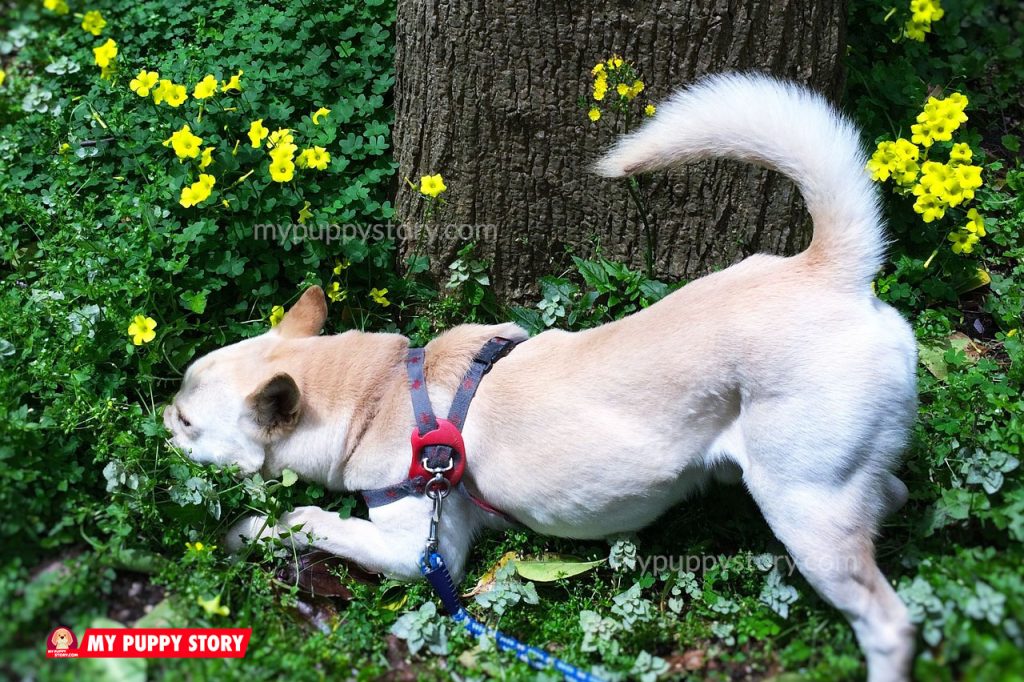
It’s important for the owner not to turn her back on a puppy during the housebreaking period, because she needs to watch for signs that the puppy needs to go sniffing, circling, pacing. This can be the most difficult part of the process.

Here are some tips to make it easier to keep an eye on the new puppy:

  • Use baby gates that are easy to move and set up to keep the pup corralled in the same room; i.e., the kitchen when dinner is being prepared, or the TV room while the family relaxes together in the evening.
  • Use a long (six-foot) leash to tether the pup to the wrist or around the waist.
  • Use a crate (first, consult with veterinarian to learn safe and humane process for crate training)

When Accidents Happen

Do not punish a pup for soiling in the house. Puppies are emotionally very sensitive, and punishment for housebreaking accidents can cause the puppy to become frightened of the owner. This will likely prolong the house training process, causing distress for both owner and puppy.

Be sure to clean up any messes with an ezyme product that will completely eliminate any trace of odor so the dog will not return to the area to eliminate.

Puppies Want to Please Their Owners

Remember, a puppy wants to please its owner, but she doesn’t understand human language. She has to learn what is expected of her, and she relies on her owner to gently and kindly teach these expectations.

Why Dogs Love Clicker Training

mypuppystory.com

Click, treat, click treat! All across the world as positive reinforcement and gentle training methods become popular, clicker training has proved over time to be one of the preferred methods for teaching dogs. Indeed, based on the principles of classical and operant conditioning, clicker training appears to highly interest dogs who seem to look forward with much anticipation to their clicker training sessions.

Clicker training has also proved beneficial to treat behavioral problems in dogs. It is not unusual to hear about reserved, timid dogs, opening up and gaining confidence thanks to a clicker. Even fear and aggression issues can be resolved with the use of a clicker.

Understanding Clicker Training

But what is a clicker and how does it work? A clicker is a simple noise making device that was once used as a child’s toy. It is basically a rectangular plastic box with a flexible metal tongue that makes the characteristic clicking sound upon being pushed down with the thumb. This device is used to tell your dog in a very straightforward way that he has been doing what you asked him to do. In order to work, the clicker must be followed by a reward being either a mouthwatering treat or a brief tug of war game.

By watching carefully a clicker training session, it appears as if the clicking noise is used to replace verbal rewards. Indeed, a clicker can be a better tool in delivering a ‘good boy’ to your dog. It is fast, always the same and dogs appear to understand its non emotional meaning quickly and clearly.

Why Dogs Love Clicker Training

Clicker training is based on classical conditioning. In order to understand classical conditioning dog owners must go back to Ivan Pavlov. The Russian scientist had figured out how dogs developed a tendency to drool at the sound of a bell. This was a learned behavior developed with time, after the dogs had been used to being fed after the bell was sound.

In the same way, dogs associate the clicker with tasty treats. Indeed, some dogs even drool buckets of saliva upon seeing the clicker. This is one reason why dogs love clicker training. The other reason is that clicker training also works because of operant conditioning.

In order to understand operant conditioning, dog owners must go back to Skinner and his rat studies. Skinner had set up special metal cages (known as Skinner boxes) where rats had to push a lever in order to get fed. In simple words the rat had to ‘operate’ in order to get a reward.

In the same way, dogs must perform some actions in order for the owner to click and treat. Because a reward follows, dogs therefore are eager to work and seek clicker training sessions with much anticipation.

Clicker training is therefore a marvelous way for dogs to learn. As old training methods based on punishment and coercion start to fade away, a new path of reward based training techniques is being paved and built over the old fashioned training methods of the past.

Unsung Heroes.The Dogs That Save Lives

mypuppystory.com

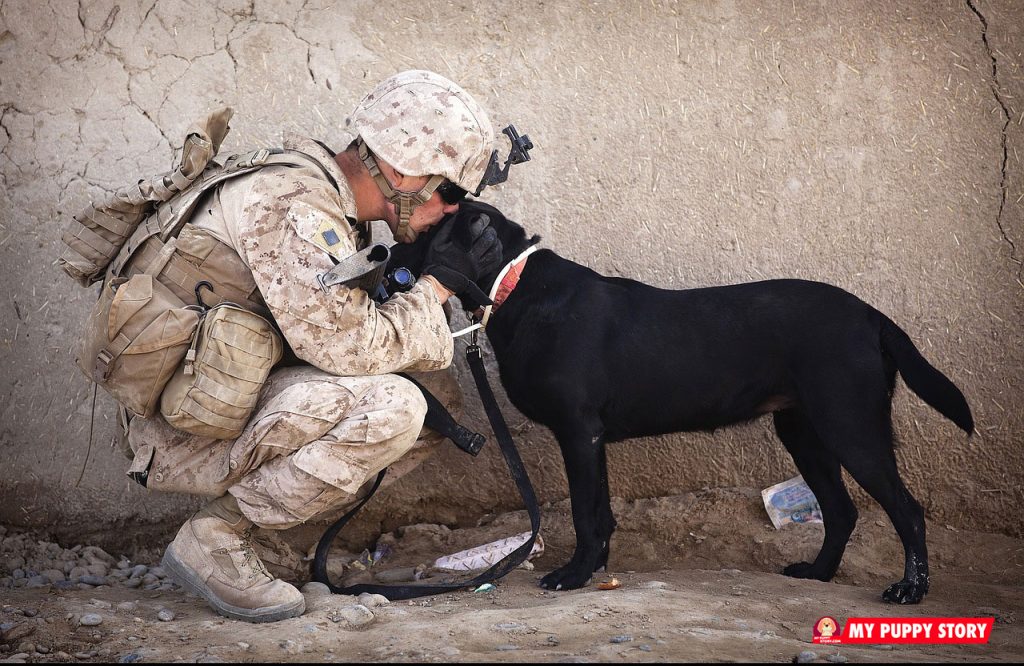
Dogs have long since been appreciated as ‘man’s’ best friend’ but do we really appreciate the very breadth of roles they carry out that help to ensure that humans are kept safe?. These dogs work not for money, nor recognition, but for the praise of their owners and for a meal at the end of the day. They have saved countless lives and, in doing so, many have lost their own. The photograph used to illustrate this article includes a memorial to honour just a fraction of the dogs that died in warfare and, in my opinion, it is a particularly poignant image.

Military Working Dogs

‘About.com’ tells us in ‘Military working dogs’ that dogs have been used in warfare as far back as Roman times, when they were sent into battle with razor blades attached to their collars in order that they appeared particularly fearsome to their enemies. They were used in world war I, Primarily to keep the rat population down in the trenches, but they came into their own in WW II when the Americans trained over 10,000 canines for use as sentries, scouts, messengers and mine detectors.

In current warfare’discovery.com’ points out in’Dogs of war’ that the troops depend on dogs to find hidden explosives and lost soldiers. Corporal Andrew Guzman states that he trust the dogs more than metal detectors and mine sweepers. These dogs are also trained to detect the most common compounds found in the manufacture of IED’s ( Improvised Explosive Devices) and have saved thousands of lives in this way. The relationship between soldier and dog can be just as strong as one between soldiers, they depend on each other to stay alive.

Working or Assistance Dogs

Working dogs are defined as dogs that are trained specifically to aid a person with a particular health problem. Guide dogs for the blind are probably the best known, but thousands of dogs around the world help people with varying illnesses. Their roles vary from giving people comfort and company to saving their lives. ‘disaboom.com’ tells us in service dogs help disabled, save lives that dogs that started life as narcotics dogs can be trained to be able to sniff out the slightest trace of peanut oil, therefore saving their severely allergic owners from a potentially fatal reaction. Other dogs are trained to be able to detect the changes in a persons body chemistry up to 45 minutes before an epileptic seizure, therefore being able to give the sufferer adequate warning to get to a safe place and to summon help, if required.

Dogs can also sense changes in a persons blood sugar levels, making them invaluable in helping diabetics to avoid hypoglycaemic attacks, and possibly comas. Research is still being carried out on the question of whether dogs can smell cancer. A study done in California points to evidence that dogs can detect early and late stage lung and breast cancer. Later studies have shown that ovarian cancer has a different chemical smell that dogs appear to be able to distinguish. The possibilities for the future appear endless.

The Special Relationship Between Human and dog That Saves Lives’

Lifegaurds don’t just come in the human form! The ‘life guard dogs of Italy’. are as dedicated as any lifegaurd crew! These 300 dogs, mainly Newfounlands and Labradors, fearlessly jump from helicopters to rescue hapless swimmers off the coast of Italy. There are many individual stories of courage and bravery from dogs both trained and untrained . In Haita in January 2010 search and rescue dogs worked tirelessly and found, amongst others, 3 girls trapped under 4 feet of concrete, they were pulled out alive. Other stories include a woman in Minnesota whose dog, Bella, jumped on her bed, alerting her to the smell of smoke that heralded the fact her house

Tips for Training Basset Hound Puppies: Toilet, Separation, Collar and Lead Preparation

mypuppystory.com

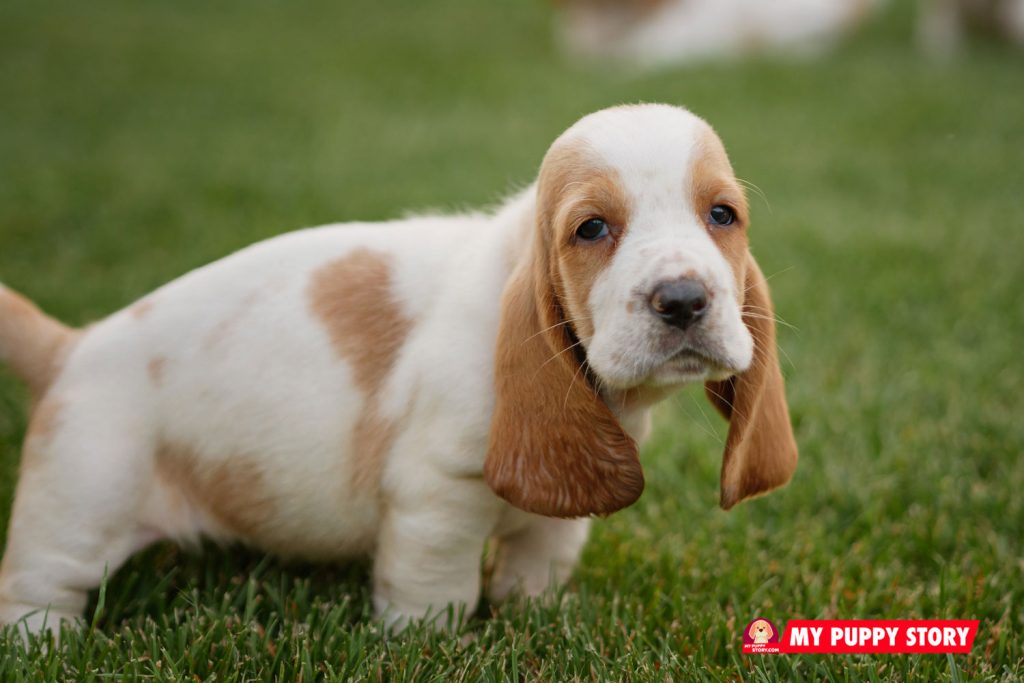
Basset hounds are slow to mature mentally and are notoriously slow to house train. But once they have it, they don’t forget it. The pup will give its owner signs when it needs to relieve itself, a chance for the owner to spot them, pick the pup up and take it outside to go to the toilet in the proper place. The signs to look out for are:

  • Running about sniffing
  • Turning around two or three times
  • Squatting to relieve itself

Good Practice for Encouraging a Pup to Relieve Itself in the Correct Place

Every time the pup wakes up, after eating and drinking and after playing are all key times when an owner can set up the routine of letting the dog out to encourage it to relieve itself in the correct location, outside rather than in the house. Even if it doesn’t relieve itself to start with, it will soon get used to the process of going outside and with regular positive reinforcement the pup will start to do this itself.

An 8 – 10 week puppy is unable to control its bowels and bladder all night so expect accidents and put down plenty of newspaper outside its bed so that any mess can be easily cleared up. During the day it is an idea to put newspaper down by the door through which the pup will go out, then if the pup doesn’t make it completely outside it will soil the newspaper. If the time of year allows, leaving the door open will encourage the pup to let itself out. However, owners need to be on the lookout, when the weather cools because the door will be closed and the pup will ask to go out.

Punishment doesn’t help house training, particularly if the reason the pup messes inside is because no one is there to let it out. With the best will in the world, mistakes are going to happen and if absences are likely to be flexible, a dog-flap might be an option.

Socialisation and Separation Training of Basset Puppies

Basset hounds are pack-animals who don’t do well alone. They love people and should be socialised at between 8 to 12 weeks of age. A basset pup can be very sensitive and impressionable so must feel safe and protected during the training.

Although owners spend a lot of time with their puppies, there are times when it must be left alone. A suggested method for preparing the puppy for separation is:

  1. Firstly, play with the pup and when it seems to be tiring put it in its bed with a favourite toy and a couple of biscuits/treats.
  2. Then leave the puppy for 15 to 20 minutes. If it barks or whines, ignore it.
  3. Return to the puppy when it is quiet and give praise.

In time, the puppy will realise its owner will only return when it is quiet and not when it’s making a noise. Leaving a radio on in the background will provide comfort or giving the pup a piece of old clothing that has retained the owners smell will help to reassure it.

Training a Basset Puppy to Walk with Collar and Lead

Basset puppies tend to take to a collar and lead quite quickly, but the following tips may help speed up the process:

  • Four or five days after bringing the basset puppy home put a soft collar on it.
  • Put the collar on every day. The pup will probably scratch at it but ignore that.
  • After a week the pup should be accustomed to the collar so the next step is to attach a lead to the collar and let the pup trail it behind it for a few minutes.
  • Play with the puppy or put a meal down for it – the pup will get used to the lead and collar in a positive environment.
  • Pick up the lead and encourage the pup to walk beside the owner. Speak calmly and put a special tidbit in the hand.
  • Allow the pup to smell the tidbit and encourage it to follow the smell. The pup will soon be walking on the lead without realising it.

It is important to give plenty of praise to the puppy and it’s worth keeping the training sessions short. It’s much more effective to carry out several short sessions during the day, if possible, rather than one long one which will tire both pup and owner and try the patience. If there is an older dog which walks steadily on the lead it will be easier to train the new puppy as it will normally happily trot alongside its kennel mate.

There are hundreds of websites selling products for dog care and training, but one item that is recommended by breeders and trainers is a nylon collar, adjusted with 2 buckles, interlinked with a small circle of chain, with a ring onto which the lead is clipped. If it is adjusted correctly the collar will fit nicely, but if the puppy pulls or tries to escape, the collar will tighten to facilitate control, safely and securely.

Due to the terrific growth rate of young basset hounds there is a huge pressure on the puppies’ ligaments, muscles and bone development, so it is recommended to avoid long walks with a young dog up to 6 months of age. With this in mind, it might be worth carrying out the collar and lead training in the garden or a restricted place where the puppy isn’t tempted to walk too far.

The Briard as a Family Dog: The French Sheepdog That Loves Kids

mypuppystory.com

The Briard is a breed that can thrive on a farm or equally well as a family companion. If child and dog are raised together, things tend to turn out well.

The Briard (pronounced “BREE-ard”) is a very old breed. According to the American Kennel Club (AKC), the Briard dates back to at least the Middle Ages. Written records go back to the 12 century. In France, it is known as the Berger de Brie. It can be a fun-loving dog, but needs firm (not forceful) handling, structure, and exercise.

Breed Standard for the Briard

This breed belongs to the Herding Group. It was recognized in 1928. Males should be 23 to 27 inches at the withers. Females are 22 to 25 ½ inches. It should be “vigorous and alert,” and its structure reflecting strength of muscle and bone.

The head should be held alert and proud. The neck should be “strongly muscled” with a good length. Shoulders slope at a 45-degree angle supported by strong muscles. The hindquarters should be “powerful, providing flexible, almost tireless movement.”

Briard Characteristics

As a herding dog, the Briard likes to work. On the farm or ranch, they will herd all manner of animals, depending on the individual dog. Like most herding breeds, the individual herding instinct varies. In the family environment, this dog will herd family members and other pets, and will often place itself in strategic positions within the home to keep watch on its “flock.”

They can be wary of strangers, so puppy training and socialization is vital. It is a breed of great character, initiative, and curiosity. It will protect the family and responds well to proper obedience.

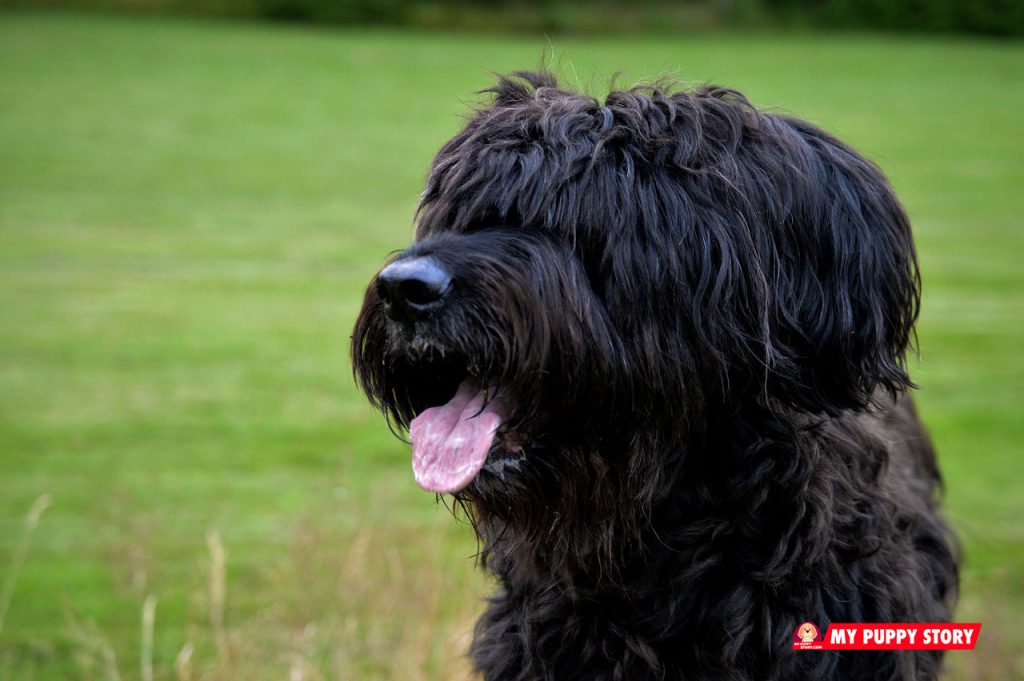
This dog has a lot of facial hair that forms itself into a nice chin beard. It grows hair over its eyes in a short period of time, and often looks as if it cannot see what is directly in front of it. It can also have the appearance of peering out of its mane, as if spying.

Care, Grooming and Health Concerns of the Briard

The dog needs regular brushing, but actually does not shed as much as some. It has been known to do a good job of self-cleaning, although due to the style of its coat, things tend to stick to the dog after it’s been outside. It should be given a good walk or run daily.

The Briard is famous in veterinary circles for getting bloat (the stomach distends with gas and fluid), a potentially life-threatening situation. It can also have, like most large breeds, hip dysplasia. Eye problems have been recorded as well.

Overall, the Briard is a wonderful bread that does well on the farm. It also serves parents and children well as an adaptable family dog.

How to Lead Train Young Dogs: Getting a Puppy to Walk Well on a Lead

mypuppystory.com

After three months old, a puppy is ready to brave the big wide world. However, getting him to walk well on a lead can be problematic.

All young dogs are inquisitive by nature, and want to explore. This can make lead training difficult, as the puppy wants to be everywhere but by the owner when they go for a walk. The sights, sounds and smells of new places can be irresistible to a puppy, and it is important to catch poor lead behaviour very early on before it develops in to something more difficult to control.

The Pulling Game

Many dogs don’t go through an adequate socialisation or lead training programme when they are young. This leads to pulling, biting and snapping when other dogs come in to view. The dog makes a harsh rasping noise as he tries to pull away from the lead, making walking an exhaustive process for the owner.

A well-trained dog can be a pleasure to walk, but a poorly-trained one can be frustrating.

The First Principles of Lead Training

Firstly, a dog needs to be well socialised. This means that he is used to other dogs and responds well to them. This is why it is very important to introduce the dog to as many others of his species as possible as soon as he has had his inoculations against disease. Going to socialisation classes early on is invaluable, or even just taking the dog to the park and letting him romp with others, or introducing him to friends and family who have dogs too, so he can get used to being around all manner of breeds and temperaments.

Starting Lead Training

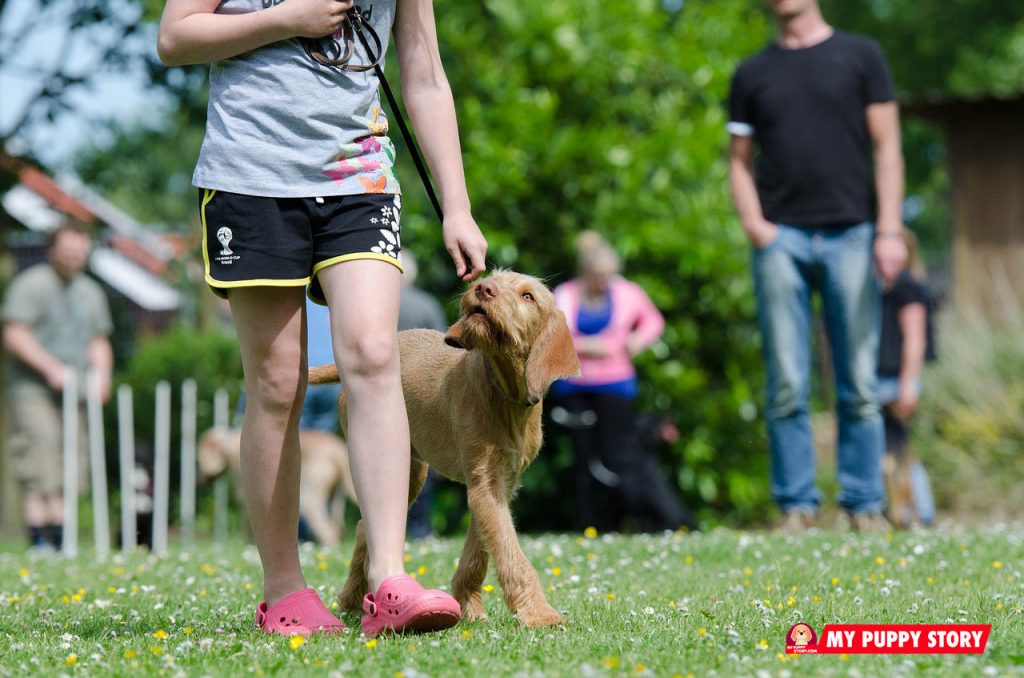
As soon as the pup is ready to go out, use the lead as part of toilet training. Pop him on it when he goes in to the garden and walk with him as he has a good explore. Encourage him to go where he likes on the lead, letting him get accustomed to it and praising him for good behaviours.

Reward with treats or puppy biscuits if he comes back to you, even on a lead, and wears the lead without chafing at it or jumping about. Gradually, the puppy will understand that the lead is a positive thing that lets him go out, rather than something that will tether or restrict him.

Continuing Lead Training in the Outside World

When your pup is comfortable with the lead, it is time to go on the first walk together. Get lots of treats and set out when the puppy is feeling confident. The best possible beginning is to take another dog along too, as the puppy will focus on the dog rather than pulling.

If having another dog along on the walk is not possible, take the following steps to achieve a perfect walk:

  • Reward the puppy when he stays near you without pulling
  • Keep him focused by showing him treats and encouraging him
  • Try not to pull on the lead, or shout, as the puppy will need to trust his owner if things get frightening
  • Engage his attention with a favourite squeaky toy if he gets distracted
  • Walk at an easy, gentle pace without stopping so he understand he needs to walk beside you
  • Try to keep going – don’t stop unless he needs to go to the toilet, as this will make your pace more difficult to second-guess and understand
  • Always keep calm, confident and relaxed, as tension from the owner will wind the puppy up.

If the puppy does well, reward him with lots of love and affection. A walk that goes well the very first time should be the best possible experience for owner and puppy, and this can be repeated again and again with positive reinforcement for a happy and relaxed future together.

Puppy Training and Socialization: It’s Never Too Early to Enroll a Puppy in a Training Class

mypuppystory.com

Early training and socialization can literally save a puppy’s life.

Canine behaviorists today agree that early socialization and training are essential. They propose that a puppy begin classes, for both the socializing and training they provide, at ten weeks of age. However, many people, including veterinarians and breeders, are still in the dark ages about the appropriate age at which to begin training and socializing a dog.

No Need to Wait Until the Puppy is Completely Inoculated or a Bit Older

Some breeders and veterinarians caution against putting a puppy into a training class or social situations with other dogs too soon for fear that they might contract a disease before they are completely inoculated. They stress waiting until the dog is six months or one year old before beginning.

However, many canine behaviorists argue that the disease risks to a puppy that is exposed to other healthy puppies in a well-run puppy class are minimal compared to the problems that often arise because that puppy was not socialized or trained early on. Given that the window of opportunity for socializing a puppy with other dogs is anywhere from four weeks to four months, it doesn’t make sense to wait. Yet so many dogs find their way to a trainer only after their undesirable behavior and aggression are well established.

In the past, heavy handed, choke-chain and other harsh methods precluded having a puppy in training too early. Thankfully, these methods are slowly dying out in favor of positive reinforcement and canine-friendly training techniques.

Puppies, as well as Mature Dogs, Need Year-Round Socialization with Other Dogs

Many dog owners, as well meaning and caring as they may be, are not aware of the consequences of under-socialization. They are not aware of the negative effects on a dog that is, for the most part, isolated from other dogs. Fear aggression and its by-product leash aggression are two of the most common problems among dogs that have not been socialized with other dogs.

Puppies should be exposed to a variety of other dogs – all sizes, ages, and breeds – as soon as possible and with regularity. Even brief periods of isolation or lack of socialisation due to poor weather or demanding routines can be incredibly damaging for a pup’s social habits. A month in a puppy’s life is the equivalent of one year in a human’s life, meaning that extended gaps in socialising can have devastating consequences on their social health.

Dr. Ian Dunbar, a veterinarian and internationally recognized animal behaviorist, has cautioned that “the number one cause of death among dogs is bad behavior [from lack of training and socialization].” A dog’s life is literally in the hands of his/her owner.

Pros and Cons of Pedigree, Cross-Breed and Non-Pedigree Dogs

mypuppystory.com

Pros and Cons of Pedigree, Cross-Breed and Non-Pedigree Dogs

Before choosing a dog it is important to take some time to consider whether to get a pedigree, cross-breed or non-pedigree dog. Each has various pros and cons, which may impact upon finances and preferences.

Pedigreed Dogs – Pros and Cons

The main advantages associated with opting for a pedigreed (pure-bred) dog is that this makes it easier to know more about appearance and usual temperament, through researching a specific breed. Pedigrees are typically well-raised, making it likely that the animal will be healthy. However, contrary to what one may be led to believe, it is actually pure-bred dogs that tend to suffer more frequently from both physical and psychological health problems, due to inbreeding.

In Dog Basics, Davis identifies disadvantages associates with buying a pedigree dog, to include the following:

  • More expensive than cross-breeds
  • Some prone to hereditary problems
  • Some prone to particular ailments
  • May have high care needs
  • Certain breeds are hard to obtain as rare

Cross-Breed and Non-Pedigree Dogs – Pros and Cons

Advantages relating to opting for a cross-breed, include that they are normally more hardy and less expensive than pedigrees, with the latter being particularly relevant, in today’s difficult financial climate. Being able to know the parents, it is typically much easier to then get an idea as to how the dog’s appearance and character will map out. Davis highlights a key advantage of choosing a cross breed: being that they are usually intended, making it more likely for puppies to have been raised with care, while disadvantages of cross-breeds include that they are often not easily available and some combinations can be very hard work, such as a Border Collie x English Springer Spaniel.

In contrast to pedigreed dogs, non-pedigrees are typically inexpensive and are less likely to suffer from various ailments and health-related problems. Non-pedigreed dogs are also much easier to obtaom and many different types are often readily available. However, according to Davis, non-pedigreed dogs have the following disadvantages:

  • Character traits of parents generally unknown
  • Uncertain how dog will turn out
  • Hard to be sure the dog has been properly raised and cared for

As highlighted above, knowing the pros and cons associated with pedigree, non-pedigree and cross breeds will make it much easier when it comes to choosing a puppy or rescue dog. While pedigree dogs such as Jack Russell Terriers and Labrador Retrievers are usually raised with great care and have a smart appearance, they are more likely to suffer various physical and psychological health problems, due to inbreeding.

Poodles: Are They Good Family Pets?

mypuppystory.com

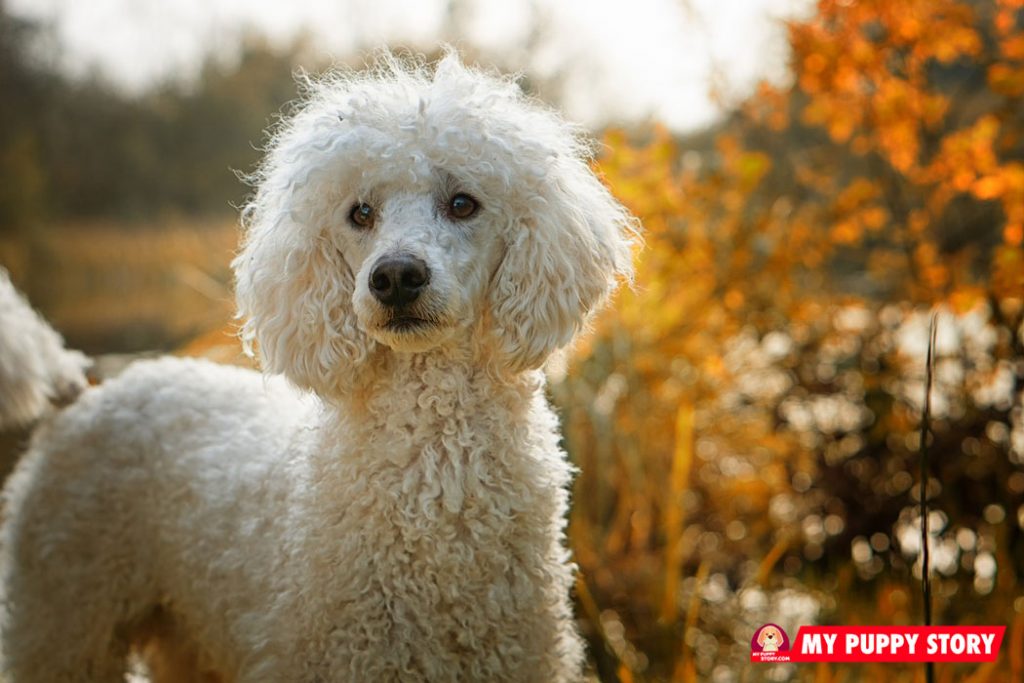
Although poodles are often stereotyped as persnickety, pampered pets, they are in fact, very affectionate, sweet dogs, who love to please their owners. Considered the second most intelligent dog breed, they are responsive and easy to train. Affectionate, energetic and entertaining, these dogs are the ninth most popular breed in the United States, according to American Kennel Club (AKC) statistics.

The AKC classifies poodles into three types, standard, miniature, and toy, based on their height (not weight). Standard poodles, the tallest of the three types, are 15 inches or higher. Miniature poodles measure between 10 and 15 inches, while toy poodles come up to 10 inches. The measurements are based on a dog’s height at the highest point of his or her shoulders.

Poodles were originally bred in Europe to be water retrievers. Although their history is not completely certain, it is believed that the standard poodle was the first to be bred and the smaller ones came later. Miniature poodles may have been developed as hunting dogs; toy poodles performed in circuses and were favorite companion pets of French royalty during the 18th century.

Poodle Temperament

Standard and miniature poodles make wonderful family pets. They like children, and are playful, protective, fun-loving dogs. Because of their small size, however, toy poodles need to be handled very gently. They are better suited to homes with older children or adult occupants only. All of the poodle types crave attention from their owners and therefore thrive in homes where they receive a lot of love and affection.

Because they are smart, responsive and eager to please, poodles are very trainable pets. They also can be sensitive, nervous dogs, particularly the miniature and toy varieties, and, as a result, tend to do better in non-stressful environments. Poodles can adapt to almost any size home as long as they remain mentally and physically active.

Poodles’ Average Lifespan and Veterinarian Visits

Poodles’ average life span is between 11 and 13 years. Like all dogs, they require regular veterinarian check-ups and shots in addition to heartworm and, often times, flea prevention medication. They also need their teeth cleaned annually by a veterinarian.

Poodle’s Activity Requirements

Because poodles are energetic, intelligent dogs, they need both physical and mental activity. Daily exercise is necessary, along with non-repetitive playtime activities, to prevent them from getting bored. Standard poodles especially are very active dogs and enjoy long, brisk walks, while the miniature and toy varieties require a more moderate level of daily physical activity.

Poodle Grooming

Poodles have thick, curly hair that grows quickly. These dogs require daily brushing with a slicker brush in addition to washing and trimming every one to two months. Other grooming requirements include cleaning their ears and the area near their eyes, in addition to clipping their nails.

Where to Get a Poodle

Local shelters and humane societies are great places to find a poodle. In addition, there are numerous poodle rescue organizations that have wonderful pets waiting to be adopted. Rescue and shelter dogs, while often requiring a little extra love and attention initially, tend to be very appreciative, loving pets. It also can be a very fulfilling experience to provide a good home for an abused or abandoned dog.

When purchasing a poodle from a breeder, it is a good idea to do extensive research about the breeder in advance. There are numerous poodle breeders from which to choose a pet. The time dedicated to locating a good breeder will be well worth the potential heartache and cost resulting from an unhealthy dog.

Old English Sheepdogs: Advice from a Sheepdog Owner

mypuppystory.com

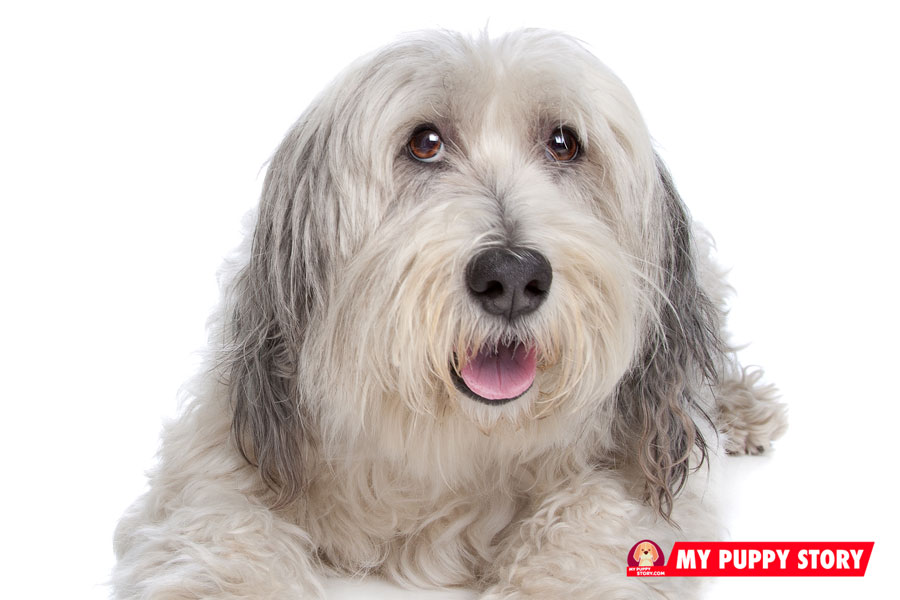
An Old English Sheepdog is famous for its flowing gray and white hair. According to the American Kennel Club’s official description, Sheepdogs, also called OES, are a large boxy breed averaging 21 inches tall, about as long and with powerful legs. This is large enough to easily reach a table top. They should not look thin. Sheepdogs have a double layer coat. Under the fast growing hair is a layer of waterproof undercoat. Shedding is not a big problem with this breed because of the need for regular grooming. You are more likely to find balls of fluffy undercoat than individual hair on your floors and in corners.

This breed is nicknamed “Bobtail” because of their clipped tail. Tails are clipped at birth which may rarely leave a short stump that results in a small fluffy tail like a rabbit. No tail should be evident in show dogs. Working dogs sometimes get shaved right along with the herd of sheep as the long hair can be used to make clothing.

Temperament: A Big Personality

Old English Sheepdogs are herding dogs useful for driving sheep, cattle or kids. When you bring a puppy home he may immediately try to herd you and your family. They do this by using their body to block your way, resembling a cat rubbing on someone, not by nipping or biting.

An OES has a big personality to go with its large body. These dogs are overly enthusiastic in everything they do. They are intelligent and eager to please and will study your movements, making them easy to train. Old English Sheepdogs bond passionately with their families. They keep their youthful energy longer than many breeds. They do not bark excessively if taught properly, although when they do, it is very loud.

Because of their eagerness and size they often get in the way. They will greet visitors as if their sole purpose was to meet the dog. They could easily knock children down in their eagerness to find an idle hand to pet them. They want very much to be lap dogs. Their big feet will step on your toes as they impose their large head into your lap seeking love and attention. They love games and can be very entertaining to watch. They have been described as clowns for good reason.

Two Important Needs: Attention and Grooming

Old English Sheepdogs need lots of attention. They become very attached and may suffer separation anxiety if left alone daily or for long periods. They are not dogs that can be easily passed along to another family. These dogs have no problems with commitment. They will suffer if ignored or too often confined away from people. They get along well with other people and dogs, as long as the other dogs don’t get scared by a large dog running to greet them! Too many experiences where the other dogs acts defensively will make a Sheepdog shy and afraid.

Proper socialization is essential in the puppy’s early life. Do not keep them away from socializing experiences. They have many instincts that make training them fairly easy. But owners must demand obedience strictly. Getting lazy about behavior will create a dog who will have little self control. These dogs respect and love being expected to perform. Strict training as a puppy will make them a well-mannered joy to live with. Ignoring their manners will guarantee a very large monster.

Their most obvious need is for good grooming. Grooming an OES is no easy task. Shaving them can be back breaking work. The long hair look is hard on owners and many prefer a shorter cut that is easy to care for and keep up. Even when kept short, a monthly bath and haircut is necessary for a clean pet. Their hair grows remarkably fast. Teaching a puppy to like being brushed is important. Even with monthly haircuts at a groomer, they need some maintenance at home, making a brush, a good pair of scissors, and a good shampoo essential.

To Buy or Not to Buy an OES

Before deciding if the Old English Sheepdog is right for you decide if you have the time, money and attention to provide grooming, training and love these dogs need. Owning an OES is a long term commitment since they live around 12 years. If you can be patient and tolerant while also demanding obedience you may be a good Sheepdog owner. If you have small children that need your time and attention you may need to wait for a few years until they are old enough to understand how to act around a large boisterous Sheepdog. Be sure to research an Old English breeder thoroughly and ask for references. These dogs are a healthy breed but can still suffer from careless breeding. The temperament of the parents is an important consideration too. Learn all you can about dog training and grooming before bringing home your puppy and you will be ready to be an Old English Sheepdog lover!