Bouviers Des Flandres as Family Pets

If you are considering a family pet, you should consider all the lifestyle changes that are involved with owning a pet. Such canine requirements include regular walks, baths, play time and trips to the vet. Once everyone in your family is on board with getting a dog, the choice of which breed becomes the next question.

One breed that is particularly well-rounded is the Bouvier des Flandres. This is a large breed dog but rest assured that Bouviers are family pets.

Appearance

Bouviers are known for their sturdy and proud appearance. They are a compact dog with muscular limbs. Females range from 23.5 inches to 26.5 inches and are 60-85 pounds. The males are only one inch taller; however, they weigh from 75 to 100 pounds.

In terms of their fur, they have two coats which allow them to be comfortable in winter temperatures. They can be fawn, grey or black in colour.

Another standout feature of a Bouvier, apart from their tank-like appearance, is their beard that can grow quite long. This, combined with their alert eyes, gives them a wise appearance. Bouvier breeders typically dock their tails.


Character

Bouviers are typically easy-going creatures who are a little bit shy towards strangers. They are far from timid but rather they take a few minutes to decide that a new person is okay. Bouviers are watch dogs; therefore, being cautious is simply an inherent trait!

These dogs are very intelligent and the good news about owning a smart dog is that toilet training is a snatch. They will quickly learn commands such as ‘sit’, ‘stay’ and ‘heel’. They are; however, unlikely to do tricks such as ‘high five’. For whatever reason, Bouviers are not typically drawn to do these tricks, even for a treat.

One excellent feature of Bouviers is that they respond very well to their names. As they are herding dogs, they always come when they are called. Even if a Bouvier wants to stay where he or she is, instinct kicks in and they follow your voice.

With Their Family

Bouviers are often one person dogs. What this means is that he or she will become most loyal to one family member. While they will guard their entire human family, there is one person that they will follow around the house.

These furry friends are playful but not high strung. They do not need constant playtime.

Playing tug with a rope or stick is all-time favorite game and they are extremely good at it. Tips for winning is to buy a tug-rope with a handle for you to ease rope burn and to play on a tile or wooden floor to lessen traction for your Bouvier. This game is a life-long love and Bouviers will often bring the rope directly to a family member in order to play.

With Children

Bouviers are gentle and easy-going dogs. They often seem very interested in children. To be fair, the children are usually fascinated by them too! Young children are safe around Bouviers because they do not spook and are very sturdy dogs. If your son or daughter were to fall on it or step on a paw accidentally, the dog would not be hurt and thus never be encouraged to snap.

These intelligent dogs will also protect any children from strangers. In fact, many seem to think it is their duty in life to do so. Bouviers can easily sense when a child is frightened and they have acute hearing to do so. They will stand assertively in front of the child until the stranger departs. While Bouviers are not vicious, they will growl and bark in order to protect his or her “person”.

Traits to be Aware of

While Bouviers are typically laid-back dogs, they still require a daily walk. However, getting exercise for your pet does not have to be a arduous long walk. If there are children involved, playing together in the backyard can often result in tiring both the humans and dogs entities of the family!

Bringing a Bouvier to an off-leash zone is also a great option. Since they remain in eyesight of their owner, allowing the dog to wander usually results in the owner doing a lot less exercise than the dog which is a bonus after a long day at work.

A Bouvier’s fur is low shedding but it can get tangled. Regular brushing is necessary.

Assertiveness: Alpha Human – Not Alpha Dog

The one absolute requirement of a Bouvier owner is that he or she must be assertive. Bouviers are intelligent and therefore will easily determine themselves as the ‘Alpha’ dog in the house unless instructed otherwise. They are not trouble-makers but rather simply need an assertive owner to tell them what is acceptable and what is not.

If a family is looking for an easy-going dog that is also intelligent and protective, choosing a Bouvier des Flandres can be an excellent choice.

The Boxer – The Best Family Pet

The Boxer breed is one of the most well loved breeds of dog out there. Often referred to as the ‘clown of the dog world’, Boxers make for a playful, loving and extremely loyal companion. Many boxer owners can attest to the great temperament of this breed. They make great friends to children and often times are big kids themselves, even getting their names from the way they ‘box’ with their front paws when playing.

The Boxer’s History

The Boxer got its start in Germany back in the late 1800s when German Mastiffs were bred with bulldogs. First bred to help with hunting and to herd bulls, the Boxer still holds some of these characteristics as it a very trainable breed and makes for a great guard dog.

The Boxer we know today was born in the early 1900s when breeds recognized the potential of the breed.

Most boxers are fawn or brindle in colour. You can also find white boxers out there though they are not as easy found as the more popular fawn and brindle.

The Nature of A Boxer

The Boxer it is an extremely alert guard dog and very protective but it also loves to welcome guests into the home! This attests to the loving nature of this breed. Boxer’s are very affectionate dogs and love to be around people but need to be socialized well at a young age in order to mix well with other animals.


Boxer’s are full of character and have pretty expressive faces and moods. They do extremely well with children and will bond easily with the whole family. Do make sure that your puppy is trained and socialized well to avoid he or she being overly boisterous and jumpy.

Training & Exercising your Boxer

The Boxer is an impressive breed to look at with its muscular, boxy build and stature. Boxer’s are powerful dogs and can be quite a handful and so they must be trained and socialized from a young age to ensure obedience when they get older. Due to this fact, a Boxer benefits from a dominant owner.

Some people find the Boxer difficult to train at times due to its active nature. For you to successfully train your Boxer pup, the trick is to burn off some of their energy and to use treats and toys when you begin training. You should remain assertive and be firm with your Boxer pup if you want to get the best outcome.

When it comes to exercise, it is best not to work the Boxer too hard if the weather is too hot as they can overheat easily. However having said that, Boxers should be exercised daily to burn off all their energy otherwise they will simply engage in other activities in order to entertain themselves and like most dogs they can become destructive.

A fenced in yard is recommended for Boxers but they can also thrive in an apartment as long as they get daily exercise outdoors.

Boxer Health Issues & Grooming

The health issues commonly associated with Boxers include cancer, heart conditions, skin allergies and stomach problems.

There is some debate out there about the health problems associated with white boxers however not all white boxers are going to give you more medical problems than their fawn or brindle counterparts.

It is recommended you only feed your Boxer premium pet food. If your Boxer happens to suffer from stomach problems, switch to a sensitive stomach dry food. Always consult your vet before you make a decision about your dog’s health problems.

When it comes to grooming, the Boxer needs only a brush once or twice a week and a bath every 2-4 weeks as they are quite a clean dog and often keep themselves in good nick.

This breed of dog can be quite sensitive to changes and extremes in weather so they are best suited as indoor dogs.

If you love dogs full of character and have the time and love for a playful companion, the Boxer can’t be beat. These dogs will win your family’s heart with their many expressions and goofy behaviour. From their playful nature to their expressive face, it’s no wonder they have such a great reputation.

Dominance Theory in the Domestic Dog: Exploring a Popular and Controversial Concept in Canis Familiaris

One must understand that in order for a theory to work it must predict the outcome of any given situation within set parameters.

Dominance seems to be a real hot-button issue in the dog world and is one of the most controversial theories. Dominance, in this context, describes the model that predicts how valued resources will be distributed among members of a canine pack, as Jean Donaldson points out in her seminar “Fighting Dominance in a Dog Whispering World.”

The Origin of Dominance Theory

While no one knows exactly where this theory was conceived, it can be traced back possibly to the captive wolf packs of such places as “Wolf Park” where groups of wolves who would not normally maintain a pack are forced to live together and interact with humans on a daily basis. Well, both of these cases are unnatural for the wild wolf, so how can the logical conclusion be made that they will exhibit natural reactions?

It can’t, and yet so many people study these wolves for hints into the mind of man’s best friend, the domesticated dog. Yes, some behaviors of these so-called captive wolves are very dog like and some behaviors are extremely wolf like, but it is important to understand the very real difference here: these are wild animals held in a captive and somewhat unnatural environment (meaning constant human interaction).

Wild wolf packs are comprised of a mating pair, their older offspring and young pups. As soon as the older offspring reach sexual maturity they move off in search of a mate to form their own pack. If they live long enough they will mate and form a pack. In wild wolves, dominance is only important in mating; after all would you say that a mother wolf is “dominant” over her pups? Of course not, there are better ways to describe that relationship.

“Dominant” Behaviors

Many dog behaviors are described as dominant, such as “pinning” a dog. In this situation the dog on top is seen as dominant and as such will always get the first chance at any valued resource. There are a couple of flaws in this scenario:

  1. The dog on top, in almost every documented case, did not “pin” the dog on the bottom; the dog underneath volunteered to be there.
  2. This same dog that is on top now may next be on the bottom (as seen in the photos of the two dogs), so many people call this a “role reversal” meaning that the dominant dog switched with the submissive dog for a health reason or because they felt like it.

Wait a minute, how can this theory describe something that can be changed by a dog’s whim? Sounds like a pretty weak theory.

Use of Dominance Based Training Techniques and the Results

This behavior of pinning another dog has inspired many very dangerous corrections from humans. One such is the “Alpha Roll” whereby the human rolls the dog on his back and holds him there until he submits. See “Biscuits Not Rolls” in The Whole Dog Journal. This procedure is both damaging to your relationship with the dog and to his self-confidence. It very often ends up with the dog either completely shutting down or attacking someone.

All behaviors can be explained without using dominance theory and make much more sense. Keep in mind that there have only been two unpublished research papers on dominance in dogs and both said the same thing, basically being: we cannot find evidence to support this theory.

Lost Dog Resources

You might know the feeling — one minute your dog is milling around your backyard and the next moment, he’s nowhere in sight. Be it an unlatched gate, low invisible fence batteries, or an enticing scent that has led your four-legged friend astray, all you know is that you’re in a panic to find him.

The good news is there are countless avenues through which to track him down. The bad news is it could take days, weeks, or more to do so. The following steps will not only help you cover all your bases on the way to finding a lost pet, but will also keep you occupied and feeling productive in a stressful and emotional situation.

Contact Animal Control and Local Animal Shelters

One of the first things an owner should do is contact his or her local county animal shelter and animal control. If a law enforcement officer or other individual has spotted your dog wandering near a road and picked him up, this is where he likely is. However, don’t rely on shelter staff to verify whether they have your dog. Found dog descriptions are often very vague; visit the shelter in person to view their dogs. If possible, continue to do this on a daily basis, because if your dog is found and brought to them the next day, animal control or shelter personnel are not obligated to, might not have the time to, or just won’t remember that a dog matches your lost dog’s description.

Also ask animal control or the animal shelter if you can file a lost dog report. Due to the large number of calls they receive regarding not only lost dogs, but also found dogs, most of these organizations will keep some sort of organized record of lost and found dog descriptions. Some county shelters even go so far as to follow up with you if a similar “found” dog report comes in, but don’t bet on this; it’s most effective to browse the lost/found files or bulletin yourself — and often.

Good Old-Fashioned Fliers

Once you’ve verified that your dog is not in animal control’s custody, the next step is to post “lost dog” fliers liberally around your neighborhood and in surrounding areas. Keep your fliers simple and to-the-point; typically a description of the dog’s breed, color, and gender will do, as well as contact information and a cash reward. In the off chance that someone has intentionally taken your dog or intends to keep him after finding him, a several-hundred-dollar reward will hopefully motivate that person to cash in and return the animal. Also include a color photo of your dog—the more identifiable, the better. Then slip each flier into a plastic sleeve to protect it against weather, and use duck tape to best adhere it to street signs, light poles, etc. You can also ask local businesses to display the lost pet poster.

Don’t forget to also post fliers outside your neighborhood at common intersections, dog parks, recreational parks, and other popular hang outs.

Leave a note in your mailbox for your mailman asking him to keep his eyes peeled for your pooch. His daily mail route likely takes him through many neighborhood and side streets you didn’t poster. He also can let you know if he’s spotted any “found dog” fliers that might just match your dog.

Once you’ve thoroughly plastered your neighborhood with fliers, you might consider going door-to-door with a photo of your dog in hand. More often than not a friendly stranger took your wayward pet in and has not yet spotted your lost dog signs. Otherwise, this just ensures more eyes are looking for your dog. Ask neighbors to notify you if they spot someone walking a dog that looks similar to yours.

Veterinary Clinic Contacts

Call your veterinarian as soon as possible to let him know your dog is lost. If by chance your dog was wearing a collar with rabies tags, your veterinarian is likely going to be one of the first people contacted. Also research any and all surrounding veterinary clinics in not only your town, but also surrounding ones. Call these clinics and report that your dog is missing—even better, visit in person and drop off a lost dog flier. Most clinics either have a lost/found dog reporting system or a bulletin board to post this information. Ask receptionists if they can help pass the word along to other clinics, or what other veterinarians or resources they might suggest you reach out to.

If someone does bring your dog in to a vet, the first thing the practitioner typically does is scan for a microchip. If your dog is microchipped, make sure you have contacted the chip company, verified that your contact information is up-to-date, and filed a missing dog report.

Print and Social Media: Spread the Word

Craigslist is a hotspot for posting lost and found dog notices. Create a “lost dog” classified in one (or both) of two popular categories: “Pets” and “Lost and Found.” Be careful, however, not to create identical ads in both categories, as Craiglist will not allow duplicate postings—change the verbiage between the two. Then check for coordinating “found dog” posts regularly. Don’t rely on Craigslist visitors to spot your ad and reply — you might have to do most of the legwork yourself.

Also contact your local newspaper and ask to post a lost dog listing both in their print product and online. Most papers offer these types of classifieds free-of-charge for a few days. You might also consider posting a free lost dog classified on pet websites such as PetFinder.com.

Tell technologically-savvy friends and colleagues that your dog is missing and ask if they would mind spreading the word via social media outlets such as Twitter and Facebook. Email them the same photo, descriptors, and contact information as you printed on your fliers and watch how fast word gets around town via the ’Net.

Step Outside Your Comfort Zone

Once you’ve exhausted all outlets for finding your dog in your county, it’s time to branch out into any surrounding counties. After all, if a good-intentioned stranger has picked your dog up in a vehicle, there’s no limit to how far he could have traveled in a few days. This means contacting animal control services, animal shelters, and veterinarians in adjoining counties.

Most importantly in the finding Fido process is not to give up. Many dogs aren’t reunited with their owners for days, weeks, and even months. The search is a tedious and time-consuming process, but leave no stone unturned!

Five Creative Uses for Military Dog Tags

Military personnel have used dog tags for personal identification for many decades. While this was, and is, the primary use for these items, their recent breakout into the wider non-military market has resulted in several important and creative uses that go well beyond the original military purpose.

Make a Dog Tag Fashion Statement

Dog tags offer a very versatile opportunity to create a fashion statement. As a result, they have become trendy fashion accessories used by many wearers for many reasons. They first started showing up in wide use as a fashion accessory among young people that were looking for a tough, militaristic appearance. Since then, they have gone mainstream. They are inscribable with just about anything the wearer wants them to say. In addition to the versatility of inscribing them, they also offer great variety in color choices. Add in the many different types of rope and chain necklaces that can be used for suspending them around the neck and you have a very customizable and personal fashion accessory. Whether diamond studded, gold plated or very simple and basic, dog tags are cool and people in ever-growing numbers are adding them to their wardrobe.

Communicate Medical Information via Dog Tags

Quite often, people wear dog tags in order to convey critical personal medical information such as allergies or medical conditions. This is a particularly good idea as the tags are easily attached to just about anything that a person wears or carries in addition to being worn around the neck in the typical manner. Attaching them to purses, backpacks, and shoe laces are just a few of the ways in which they can be worn in addition to the necklace method. It is important to note that this is not a wide spread use of the dog tag in terms of percentages of people that are doing this, so medical personnel may not know to look for the tags and may miss the valuable information that is portrayed on them. Keep this in mind when wearing dog tags with this purpose in mind.

Use Dog Tags as Favors for Special Occasions

Dog tags make great party favors, wedding favors, and small tokens of appreciation for any other special occasion. They can have pertinent information engraved on them that will remind the recipient of where they were when they received them, making them a great memorabilia item. Another good use is for children on field trips to wear one that identifies the child, the school and the activity. These can be given to the kids as keepsakes at the end of the day as well. The options for using dog tags in this way are only limited by the creativity of those that want to use them.

Identify Personal Stuff Using Dog Tags

They make great identification tags for stuff, too. Anything you can attach them to can be identified with the owner’s contact information. They can be used on luggage, bags, cameras, key chains, equipment bags, carrying cases, camping equipment and anything else you can figure out how to attach them to. Be sure to secure them well so that they don’t fall off and they will outlast paper identification tags many times over.

Dog Tags Support Fund Raising Efforts

Dog tags can be purchased in both small and large quantities. Many organizations have made use of dog tags to support fund raising activities. They engrave the tags with special phrases, quotes, or information about the organization and sell them to their supporters. Churches also add bible verses to them and sell them to raise funds.

Whether you want to make a fashion statement, convey medical or other identification information, give them as mementos or use them for fund raising, military style dog tags are a great way to get it done.

The Best Dog Training Tool is a Leash!

Using a leash as a dog training tool has been made famous by the Dog Whisperer on his popular TV series. This simple tool can transform any problem dog into a great pet because it transforms a problem dog owner into a great master!

The secret to a good dog is lots of attention as a puppy. Playing, throwing balls, catching a frisbie, pulling rope are all great fun, but it is the walk with the leash which will have the most benefit for the dog/owner relationship. Even if your dog is older, and has developed some problem habits, the daily walk will help bring it into alignment.

It’s always important to understand dog psychology in training your pet. Your dog does not understand English, and does not have the same desires for comfort and freedom that you have. Having a conversation about right and wrong with your dog does very little to train her! To a dog, comfort and freedom comes from understanding what is going on, feeling a sense of connection with the pack, and knowing who is boss. A good owner communicates these things to their dog through actions.

The Number One Question: Who is in Charge

If a dog does not have a definite sense that someone else is in charge, then they will naturally try to take charge: always with a detrimental result. Always remember that the dog is living in a human world; they have to live by human rules and needs. Dogs will never completely understand cars, neighbors and cats! Because of this, the dog can never be in charge. The dog simply does not have, and can never have, a deep enough understanding of the human world to be the boss.

A good example is the visitor. When someone comes up to your house they are almost always friendly. In fact, it could be your closest friend. But still dogs bark and growl and act protective of the pack’s territory. You can’t have a discussion with the dog about it, because they will never get it. Instead, they have to learn that you are in charge and that they are not running the show.

Leash Techniques

Walking a dog with a leash should be done in a masterful way. If the dog is pulling or wandering off to the side during the walk they will not be gaining much benefit. Be the boss and make your dog walk at your side, slightly behind, and make them pay attention to you.

Many dog breeds, particularly the more aggressive breeds, will want to be in charge on the walk. A good way to counter this behavior is to walk unpredictably. If they never know exactly which way you are going, when you might start or stop, or how fast or slow you will go, then they will learn to pay attention and watch. That is exactly what you want, to walk along with a bright eyed dog watching you for direction. This kind of a walk will actually bring a sense of harmony to your dogs mind because they will have a firm sense that you are in charge.

Difficult Breeds

My dog is a Blue Heeler, a very dominant breed. Even though we live out in the country where it would be perfectly safe for him to walk off a leash, I still take him for a leashed walk every evening. You would think that he knows the difference, but he doesn’t. He acts just like a dog in the city. When I grab the leash and get ready to go on the walk, he jumps up excited, bows his head so I can put on the leash, and smiles at the door waiting for me to open it and head out on the walk. It doesn’t matter that he has been running around the yard freely all day. We might have even taken several walks that morning without a leash. When I grab the leash he never thinks, “Geeze, what is she thinking? I know my way around here. I’ve been running around all day!” Instead he is just excited for a walk.

Dogs like to spend time with their people. That’s all that really matters. The leash may not be completely necessary, but it helps bring his mind into focus, and keeps us happy in our little pack: with me in charge.

Stop That Puppy from Biting: You Can Teach Your Dog Bite Inhibition

Puppies chew. They chew on wood, clothes, hands–anything they can get in their mouths.

Chewing is an essential part of their emotional and physical development, as they learn how they can relate to the world around them and as they deal with the discomfort of teething.

They learn how hard they can bite another dog through their interactions with their mothers and their littermates. When a puppy bites too hard, the other puppy runs away. If the puppy continues to bite too hard, none of the other puppies will want to play with him. He quickly learns that he needs to bite soft if he wants to continue to have fun.

Then a puppy encounters humans, who want to play but don’t allow any biting. A lot of times, when a puppy bites a human, the human yells and scolds. The puppy may not recognize the continued attention they get as a correction, and they may continue to bite harder and more frequently than their owner would like.

Act Like a Dog

One appropriate way to correct biting behavior is to react like another puppy would. Yelp or make some sort of sharp, fast sound that lets your dog know that the bite hurt. Immediately withdraw from all activity with the puppy. Get up and walk away, leaving the room if necessary. Or simply bring your hands to your sides and completely ignore the puppy.

When the puppy calms down, re-engage him in play. If he bites again, act the same way. He will learn that when he plays with people, he needs to keep his teeth to himself.

Reinforce the Behavior

Make sure that your entire family is involved in training bite inhibition. All family members should give a short, sharp sound if the puppy uses teeth and immediately end the interaction. That way, the puppy will learn that he should keep his teeth to himself in all interactions with humans.

Use a Clicker

Sometimes, this behavior modification technique doesn’t work. Especially in the case of an only puppy, or a singleton, the yelping sound gets the puppy more excited and withholding attention just makes him engage in escalating behaviors to get attention.

A more direct training method would work here. Get a clicker and teach the puppy that the clicker means reward. Click it and give the puppy a treat immediately. If treats don’t motivate your puppy, pet him right after you click. Repeat this until the puppy associates the click with the reward.

Then, keep the clicker handy while you play with the puppy. If the puppy mouths you, say “uh-uh” and wait for the puppy to release. As soon as the puppy releases, click and then give the reward. Continue this method until the puppy learns that he gets rewarded when his teeth are not on people. If you see the puppy start to bite then pull back, click and reward.

Other Reward Markers

This method is very effective, and it will help you with further obedience training. But, it can be hard to manage a clicker, a treat, and a playful puppy all at once. Try a Click-and-Lick clicker or a finger clicker to make it easier. Or use a word to mark the correct behavior and then provide the reward. The word should be one syllable any family member can say fast enough to mark the behavior–“yes” works really well, “good puppy” takes too long.

Have Fun

The best part about these training methods? The entire family gets to play with the puppy and engage in learning in a fun environment. This increases the puppy-owner bonds and teaches the puppy that training time is fun time.

Anti-Chew Spray Reviews

mypuppystory.com

There are always times when a dog owner returns home to find some unexpected damage inflicted on their household items by their pet dog. Dogs have a great sense of smell and vision to explore the world, but many times, they also use their mouths in the same process. Most of the young puppies also chew, which is a natural process that helps their jaws and their teeth and with their teething process. Dogs cannot obviously, distinguish between appropriate and inappropriate behaviors and as such, end up chewing or scratching anything.

One of the tried and tested ways of getting your dog to stop chewing on your things, whether it is your furniture, shoes, curtains or sofa, is by the use of an anti-chew spray.

What is an anti-chew spray and how does it work?

The best type of anti-chew spray depends on the type of your dog and the reason why they are chewing. The anti-chew spray discourages a dog or any other pet from chewing upon whatever you spray it on. Many of the anti-chew sprays work by having disgusting flavors in the spray, such as sour or spicy ones, which the dog would not like. Most of the anti-chew sprays are quite safe, but you should, however, do your research before buying one for your dog.

One thing that you must keep in mind is that the anti-chew spray should be for “dogs” and not for any other pet as it may contain certain ingredients that may be harmful to your furry friend. There are plenty of anti-chew sprays in the market, and you can choose the one that suits your preferences for your dog or for any particular behavior that they may have. For example, if your dog likes to chew on your clothes or the curtains, you may choose an anti-chew spray that does not stain and can easily spray upon the fabric, since all anti-chew sprays are not fabric friendly. Similarly, if your dog has become destructive and ends up chewing your hand as well, you can choose a spray that you can use on your skin as well.

The anti-chew sprays are quite effective in reducing the chewing habit in dogs, and with proper anti-chew training, which the dog owner can provide, the dog may give up chewing altogether.

The Top Anti-Chew Sprays

Grannicks

1. Bitter Apple Taste Deterrent for Dogs by Grannicks

It comes in an easy to spray bottle filled with a bitter compound, designed for your dog to stop chewing on things. The best feature about this dog spray is that it is non-toxic and biodegradable and as such, you can spray it not only on your skin if your dog or your puppy likes to chew on you, but also directly on wounds. It does contain alcohol, so it is best to spray on the bandage, rather than on the cut itself.

This bitter apple dog spray by Grannicks has a bitter apple scent, and as soon as you spray it, you will notice a strong aroma of alcohol as well. However, this smell would dissipate within a minute, which means you can even spray it when you are expecting to have guests over, without having your house smell like rotten apples. It is excellent to use around the house, as this spray does not harm the finish of real wood furniture, although it may end up staining some surfaces.

Moreover, it works well even with cats, and though it is marketed primarily for dogs, the ingredients in this spray and the exclusive spray for cats are the same. It is available in bottle sizes of 8oz and 32oz.

Pros

Cons

  • It is available in multiple sizes
  • This spray can work just as effectively on cats as well
  • The sour apple flavor helps to deter most dogs
  • It is a precise spray area
  • The spray is non-toxic and safe to use
  • It does not prevent all dogs as some of them can cope with the taste
  • Many people find the aroma unpleasant around the house

Verdict

This dog spray is ideal for those dogs or puppies that are heavy chewers and helps to discourage them from chewing. It is safe to use everywhere around the house. Most of the pet owners who use this spray have considered it as “pure magic” as their dogs never go near the items when you spray this on. Many customers use this for their cats and other pets as well.

Emmy’s Best

2. PRO Anti Chew Spray for Puppies by Emmy’s Best

Emmy’s Best PRO Anti Chew Spray for Puppies is one of the best sprays to deter dogs from chewing on your things, especially if you are wondering how to stop dogs from chewing on wood. The best feature about this spray is that it is alcohol-free and can be used on houseplants as well as it is safe to use on indoor vegetation. There is also an online training program for 14 days which the users can watch at their own pace which is provided with the spray so that the users can learn the tried and tested methods to teach the dogs on how to stop chewing once and for all.

It is quite safe to use this spray on almost anything, be it is your shoes, your belongings or your furniture. It also helps to deter your little pooch from chewing on it. This spray uses a combination of a bitter agent along with tea tree oil, which helps to soothe your dog.

It is available in the size of an 8oz bottle and is safe to use on a range of items around the house, including electrical cords, shoes, household furniture, pet’s bed and even on other pets. This spray is ideal for teething puppies but also works on mature dogs and rabbits as well. The goal is to discourage not only chewing but also scratching behavior in dogs.

Pros

Cons

  • It is a no-mess application
  • It includes training tips
  • The spray is alcohol-free
  • Suitable for both puppies and dogs
  • 100% satisfaction guaranteed
  • It is great for teething puppies
  • Some dogs may eventually like the taste of the spray
  • The spray may wear off quickly from things

Verdict

This spray works well on both puppies as well as on big dogs, but it is ideal for puppies. It is non-toxic for your dog, and as such, you can spray it all over the house, without any problem. It promises to stop your dog from the habit of chewing in as little as just two weeks’ period. Most of the customers who have used this spray had positive reviews to share; the majority of the dogs stopped chewing and scratching on the furniture within two months of using the spray.

SynergyLabs

3. Fooey! Ultra-Bitter Spray by SynergyLabs.

This spray, Fooey! Ultra-Bitter Spray by SynergyLabs is incredibly bitter. The best feature of this dog spray is that it has all natural ingredients in its contents, which includes an extract from grapefruit skin, which is extremely bitter. The spray is, however, entirely safe for your pets, and it will surely discourage them from chewing on everything around the house. It is non-acidic and non-flammable, which makes it perfectly safe and you can also use this inside the house. It can also be used directly on your dog’s skin, especially if you are trying to discourage gnawing and licking behavior. It can also be used outdoors if you want to prevent your dog from chewing on your flowed beds and your plants.

This spray is designed not just for dogs, but you can use it for almost all types of pets you can think of. It includes cats, birds, horses, ferrets, deer, and rabbits. This spray is specially designed to stop a host of pet behaviors, which are big problems for the pet owners. This includes biting, chewing, and licking. It can also be used as part of a training regime for your pets when you bring your puppy home for the first time. It is best to be used with positive reinforcement and treat to encourage good behavior in pets and discourage these problematic traits.

It is, however, not a good idea to use this spray on your own hands. Even though it would stop your pet from chewing on you, but will undoubtedly make your hand smelling horrible for days. There should be a few things you should be careful about, such as to avoid getting the spray on yourself. Moreover, it is best for households where there is more than one dog. There are different options in the sizes of the spray bottles. These are available in sizes of 4oz, 8oz, and 16oz bottles.

Pros

Cons

  • This spray can be used for all types of pets and not just for dogs
  • It is available in different sizes
  • The spray is alcohol-free
  • This spray comes with all natural ingredients
  • It does not stain your furniture
  • It is color, fragrance, and dye-free
  • The full strength wears off in a few hours
  • It is difficult to get rid of the smell if you accidentally get it on your hands

Verdict

This spray is ideal to use on all types of pets, and since it is non-acidic and made with all-natural ingredients, you do not have to worry about the harmful substances, that it may contain.

Moreover, this is an excellent choice if you are wondering how to stop your dog from chewing on wood. The price is also affordable, and the spray is quite useful. Most of the customers recommend this product to be effective in reducing the pets’ chewing habits but have negative reviews to share about how hard it is to get rid of its foul smell from your hands and clothes.

Nature’s Miracle

4. No Chew Deterrent Spray by Nature’s Miracle

If you own a dog that bites itself and causes hotspots, then this spray by Nature’s Miracle is the ideal solution. You can spray it on the area where the dog usually bites himself, and you can see how quickly the hotspots disappear. It is a concentrated and long-lasting formula, which is made entirely from natural ingredients. In addition to this, it also uses a calming scent as a significant part of the formula, which helps to soothe the behavior or dogs. One of the critical causes for dogs to bite themselves or chew on things is due to anxiety, and this spray provides a calming effect for the pets. It helps the dog to get not only some physical relief but also emotional relief as well.

This spray has all natural ingredients, which is why it is safe to use and is alcohol-free. You can also apply it to bandages, injuries, skin infections and other ailments, with, of course, prior approval from the veterinarian. It is available in the size of 8oz and 16oz bottles.

Pros

Cons

  • It is alcohol-free
  • It consists of all the natural ingredients in its contents
  • It has a long-lasting concentrated formula
  • It is safe to use on all types of surfaces
  • The spray has a calming effect of reducing anxiety
  • Maybe too mild for keen chewers
  • Some dogs may end up liking the taste

Verdict

The spray is best to use if your dog is in recovery as it will soon go away in a flash, without the common problem of the dog biting its own wounds and causing infections and your dog will quickly be back to normal. It is ideal for anxious dogs to provide a calming effect and help them emotionally. Most of the dog owners have found this spray quite effective while many others did not find it useful as their dogs ended up liking the taste. Many users also complained of not being able to get rid of the foul smell of the spray from their hands.

NaturVet

5. Bitter Yuck! No Chew Spray by NaturVet

It is a really handy anti-chew dog spray, which is available in three different sizes; one of the volumes is small enough that you can keep it with you on the go. The best feature is the size of this dog spray, which means you can easily use it even when you are traveling and can have something to always keep in your purse and take with you for your dog’s playdates. Of course, you wouldn’t want your dog to chew his furry friend to pieces while he is teething!

It consists of all-natural ingredients, which include citric acid (which is common in human food for adding a bit of tartness of bitterness), and also a bittering agent. This bittering agent used in this spray is the one, which is also common in many household cleaning supplies, which ensures that accidental poisoning does not happen and it is quite useful as deemed by the governing authorities. It is an effective remedy if you are wondering how to stop a dog from chewing on wood and other items.

This spray is useful not just for dogs but is also just as effective for cats and horses as well. It is safe to use around the house since it has natural ingredients and ideal for puppies going through a teething phase.

Pros

Cons

  • It is useful for dogs, cats, and horses
  • It is high in citric acid to give a sour s flavor
  • The spray has only natural ingredients
  • It is alcohol-free
  • It does not cause staining
  • It may not be very effective with all types of dogs
  • Some dogs may get used to the flavor

Verdict

This dog spray is excellent to use if you have both dogs and cats as pets in the house. It is also the best bet to choose if you are always on the go and need to carry a dog spray to prevent your dog from chewing all the time. The small-sized bottle is ideal for carrying around without much hassle. Most customers have found this dog spray quite useful on their pets, which have reduced their chewing and scratching behavior, while many others have complained about their dogs starting to like the flavor of the spray and being destructive again.

Vet Recommended

6. OMG Nasty! Repellent Spray by Vet Recommended

This anti chew dog spray, OMG Nasty! Repellent Spray by Vet Recommended is one of the leading dog sprays, recommended by many veterinarians. This spray not only has a nice name, but it also has a bitter formula that uses the natural ingredients without any alcohol in the formula at all.

The best feature about this anti chew dog spray is that it is incredibly gentle, and it can even be applied topically without any stinging feeling or any sort of discomfort. This makes the spray an excellent choice for those dogs that have sensitive skin or some form of a skin condition, such as eczema. In most cases, however, it is best to consult a veterinarian before you start any new spray if your dog has skin problems.

This spray is ideal not just for dogs but is also useful for all other pets in the household. It can also be helpful for rabbits, and it is perfectly safe and effective for them as well once you spray it all over your electric cables. It can guarantee no more chewing. It is perfectly safe to be used around the rest of the house as well. It is best for those households, which have multiple pets. This spray is available in a bottle size of 8oz.

Pros

Cons

  • It is entirely safe to use around the entire house – on clothing, plants and all surfaces
  • It is alcohol-free
  • It is suitable for all types of household pets
  • The packaging is from 100% recycled materials
  • Vets recommend this spray
  • Some of the dogs start to enjoy its flavor
  • It is more effective when combined with no chew training techniques

Verdict

This anti chew spray is ideal for those households with multiple pets as it is effective for all. It is the best spray for those dogs that have some form of a skin condition, as it is gentle and soothing on the skin. The majority of the dog owners who have used this spray have recommended it, and so have the vets.

OUT!

7. Bitter Cherry Chew Deterrent By OUT!

If you are tired of your dog or other pets continually chewing on your upholstery, then Bitter Cherry Chew Deterrent by OUT! is the perfect choice for you. The best feature about this anti chew spray is that it is designed primarily to deter the dogs from chewing on your fabrics. You can spray it on your curtains, carpets or even directly on your couch which will put off your dog from chewing or licking on it, even when you are not at home. However, this spray should not be used on leather or woolen goods, since it is not suitable for it.

Like most other anti-chew sprays, this is also very safe to use around your house since it is made entirely with natural ingredients. It has lemon and grape seed extract and a natural bitter cherry flavor. These are all extremely bitter elements, and when combined, they create a super sour flavor. It is available in 32oz bottles.

Pros

Cons

  • It only needs to be applied once every day
  • The cherry flavor may work for those dogs that end up liking the lemon flavors
  • The smell is excellent, and the taste is horrible
  • It is completely alcohol-free
  • It does not cause staining
  • It can encourage the dog to chew on more if they like the taste
  • It is not suitable to be used on wool or leather

Verdict

It is an excellent anti chew spray to use around the house; especially, for those people who are tired of their dogs continually chewing on their carpets or curtains. Another great feature about this anti chew spray is that it gives a sweet and fruity aroma, which is pleasant smelling. Therefore, if you are one of those people who generally dislike the strong and sour smell of most anti-chew sprays, then this is the right one for your use! Most customers find this spray highly useful for their dogs.

8. Anti-Chew Bitter Spray by Particular Paws

It is an excellent choice for anti-chew spray as it is highly effective if you are wondering how to stop a dog from chewing on wood and other things. The best feature of the Anti-Chew Bitter Spray by Particular Paws is that not only does it contain the bitter taste but it also contains tea tree oil, which can actually be soothing for the dogs. The tea tree oil has been used extensively to treat scrapes or cuts in humans, and now many products are being made with it for dogs and other pets because of its healing properties and its soothing effects.

However, you do have to stay careful when choosing any product, which contains tea tree oil, since you should only use it by diluting it nicely. It can be a great option to use directly on the pet’s hot spots, and it will not just stop your pet from gnawing on their skin but will also help to relieve the discomfort, which they might be experiencing thus causing them to bite or be anxious.

It is very safe to be used around the house and on all types of household items, including clothing, electrical wires, houseplants, and furniture. It is available in the bottle size of 8oz.

Pros

Cons

  • It contains natural bitter apple extract
  • 100% customer satisfaction guaranteed
  • The manufacturers are a GMP certified facility
  • It is also safe to use on houseplants as well
  • The spray contains soothing tea tree oil which has healing properties as well
  • The effects of this spray may be short-lived
  • It may not work on all dogs

Verdict

This Anti-Chew Bitter Spray by Particular Paws is highly recommended by most customers, as it has been effective in deterring their pets from chewing, not only on things but also on themselves. It is an excellent anti-chew spray, especially, for dogs that are suffering from some kind of a medical condition or skin irritation. Also, it helps to relieve hot spots.

Conclusion

The above-mentioned anti-chew sprays are some of the best ones in the market, which we have reviewed based on their effectiveness, safety, and performance. All dogs are different, however, and chew on things due to many reasons. As a dog owner, you must figure out exactly why is your dog exhibiting such behavior and should try to solve the issue. The anti-chew sprays are very effective regardless and help in reducing, if not eliminating such behavior in dogs. However, you must check with your veterinarian before you use any particular type of dog spray, as your dog may be allergic to certain substances. It is also advisable to check with your veterinarian before sharing the dog spray amongst pets. It is best to seek their advice if the problem still persists.

Bringing a Chihuahua Puppy Home: Bright Personality and Charm Make This Breed So Lovable

mypuppystory.com

Chihuahuas have become one of the most popular dogs in America. Though there’s probably no data about what started this craze, the little pup with a big personality has taken over the country. The Taco Bell dog, Paris Hilton’s Tinkerbell, and “Beverly Hills Chihuahua” further put the pup into our minds as the dog to have.

The Chihuahua, at the heart of it, is one of the most loyal and special dogs around. They’re not just a fashion statement or ad campaign spokesdog. They’re a real charming companion. Their funny personalities charm even the most hardened cat lover. Their cheery faces brighten up even the most pouty face.

The popularity in the media has led to high sales of Chihuahua puppies. So what happens when someone, who has never owned a Chihuahua, brings one home for the first time?

Puppy’s First Day at Home

Once a Chihuahua puppy has been purchased from a reputable breeder or store, it’s necessary to introduce the puppy into one’s home easily. Chihuahuas, like many breeds, can be nervous once they’ve been introduced into a new environment. Their little bodies may shake at the sight of a child or another dog in the house.

If there is a child, it’s a good idea to let him and puppy bond at the breeder with a adult holding the puppy. Depending on the age of the child, make sure that he or she is gentle with the little critter. This will make it easier for them to bond and get along better at home.

If there is another dog or more at home, bring those dogs outside to greet the Chihuahua. Greeting each other outside gives both the older dog and puppy a neutral zone in which to meet. The older dog won’t be as territorial and will more than likely feel more comfortable with their new friend.

Chihuahuas have strong personalities and it’s necessary to show them that they don’t own the place. Yes, this will be their new home, but at first, they are guests. They can, without good supervision and training, take over the home and do whatever they please in the long run. As a new Chihuahua parent, it’s necessary to instill proper behavior from the beginning.

Make sure that the older dog and puppy don’t get into scuffles. It’s perfectly natural for dogs to tussle about in friendly play fights. But some breeds and some personalities can get a little too aggressive. Chihuahuas, despite their smaller size, can be aggressive if provoked. Keep an eye on the older dog and puppy especially when they’re getting to know each other.

Keeping Puppy Happy, Safe And Secure

Bonding between family and Chihuahua won’t take long. Once they’re inside the house, take them around to various parts of the home. Show them that this is their home, too.

Either get a cardboard box, or a pet carrier, and set it up as its bed with a comfy towel, toys, water and food. He or she needs to be potty trained from the moment it’s in the home. This kind of small enclosure makes it easy to train it and keep it out of trouble. Make sure to take the puppy outside to do its business once an hour or more. Pee pee pads are also a good training method if the Chihuahua will be living in an apartment where yard space is limited or nonexistent.

Put up barriers where the puppy isn’t allowed. Dogs, in general, love to explore. With a small puppy, make sure that cords, small toys, people food, and furniture are off limits. Cords can be especially attractive to any dog. Make sure they’re hidden or can’t be reached. Also, puppies like to leave little reminders that they’re not housebroken around cords and items laying on the floor.

Playtime is important to any dog. Chihuahuas will get a huge spurt of energy when it comes to playtime. They’ll run around the house or yard like a crazy dog. Their eyes will get wide with excitement and their tongue will hang out. If another dog is around, they’ll jump around and playfully challenge the dog to growl and nuzzle each other. Sometimes Chihuahuas will get a little too playfully aggressive. Keep them in check and they’ll calm down. Chihuahuas will also suddenly become tired after playing. It’s almost as if they’ve run out of gas.

If the temperature goes down below 70-degrees, some Chihuahuas will shake. Inexpensive clothes made for dogs help a lot. A fuzzy, colorful sock can also make for an inexpensive and practical shirt for a Chihuahua pup. Some may laugh, but Chihuahuas will look stylish and will stay warm.

Give Chihuahuas doggie treats sparingly. Human treats will lead to begging and possible health problems.

The breed is extremely loyal to its human parents. They love nothing more than jumping into an owner’s arms to snuggle and sleep. It’s up to the owner whether he wants a Chihuahua sleeping in bed with him or in a crate. Use caution and common sense based on one’s own sleeping habits and the size of the Chihuahua. As with the cold weather, they do like to snuggle under the covers, too.

Bringing a Chihuahua puppy into the home is one of the most rewarding things a family can do. With proper training and precautions, a Chihuahua will be a valuable part of the family for years to come.

About the English Bulldog Breed: Origins, Appearance, Health & Characteristics of the Popular Bulldog

mypuppystory.com

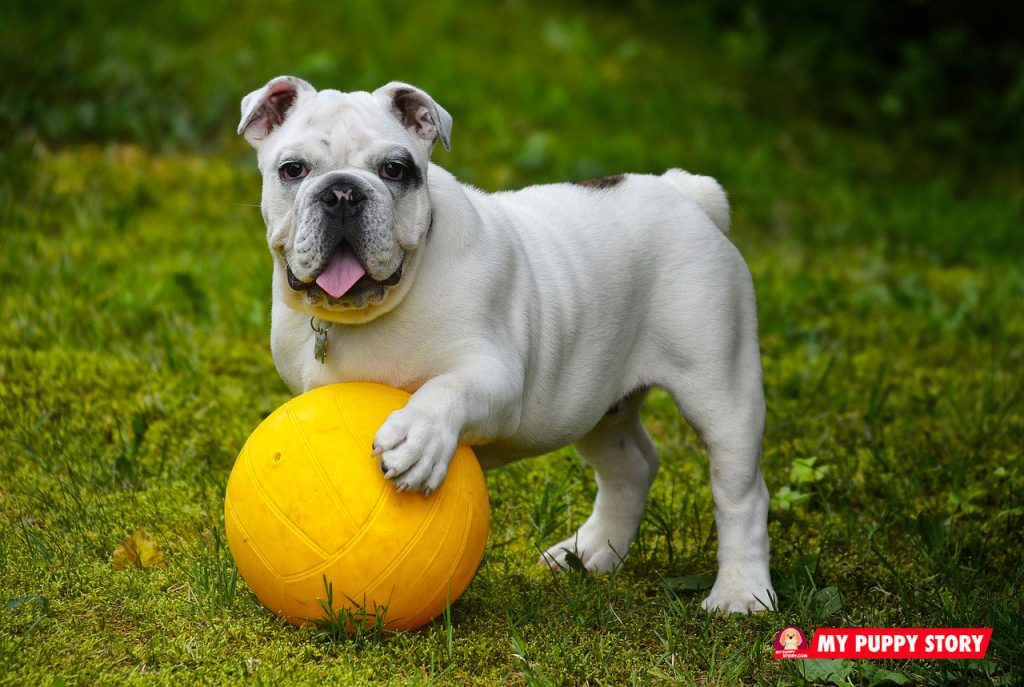
The Bulldog, often called English Bulldog to prevent confusion with other Bully breeds, is a popular dog for families and apartment dwellers for many reasons. Despite a bloody past, the bulldog is now a loyal, faithful and good-natured dog that generally gets along with dogs, children and other animals.

English Bulldog Origins:

The bulldog has an uncertain past that is the topic of much debate; however, it is known that the dogs were used in a bloody fighting sport known as bullbaiting as well as dog fights. When the fights were made illegal in the early 1800s the bulldog became almost extinct as the aggressive nature made them poor companions. A few faithful bulldog lovers carefully bred out all aggression and ferocity creating the fun-loving, friendly companion dog that bulldog owners know today.

Bulldog Appearance and Coloration:

Bulldogs are small in size, often reaching only 12-15” tall but are surprisingly heavy and stocky. Their large, sturdy build means they can reach between 40-60 pounds. Bulldogs are best recognized by their large heads, drooping cheeks called “jowls”, broad shoulders and pear shaped bodies.

Bulldogs come in many different colors including brindle; red brindle; fawn brindle; all these with white; white; black; grey; bronze; fawn; and red and all these with white markings. Bulldogs can have black masks, colored markings or piebald markings.

Lifespan, Health Concerns and Special Needs of Bulldogs:

Bulldogs live an average of 10 years but longer lifespans are not uncommon. Maximus, pictured below, was sired by a 10 year old bulldog stud that is still well and active. As breeders continue testing for genetic health problems and breeding strong, sturdy stocks the lifepspans will continue to increase.

Bulldogs have upturned muzzles and shorter windpipes making them sometimes prone to breathing problems. For most bulldogs from healthy stock, the biggest problem owners will notice is snoring…lots of snoring.

Bulldogs are very prone to overheating and should never be kept outdoors in summer heat. Heat stroke is the single most common cause of untimely bulldog death and the author cannot stress the need for air conditioning in temperatures above 80 degrees strongly enough.

Another special concern for bulldogs is that because of their heavy front ends they are poor, or non-swimmers. Bulldogs enjoy water and will often get in small wading pools to cool off, but they should never be allowed unsupervised around deep, open water. Without proper flotation devices a bulldog could easily and quickly drown.

English Bulldog Personality:

The English bulldog has a wonderful personality now, thanks to careful breeding. Bulldogs are very affectionate and will often forget their size while attempting to crawl up into a nearby lap for petting and attention. Known for their courage and good guarding ability the bulldog is alert in watching out for strangers. Bulldogs love children and will adapt readily to large families, being less of a one-person type dog than many other breeds. Some bulldogs can tend towards laziness so gentle, daily walks are great for dog and owner alike. There is a good reason why English bulldogs are in the top ten list of the AKC breed registration!